If you’re running a wastewater treatment plant, chances are you’ve stared at your aeration basins, flipped through your weekly lab results, and thought, “When the hell is this nutrient additive actually gonna work?” I get it—you’re not here for fancy lab jargon; you’re here to hit effluent limits, keep your permits intact, and stop burning extra cash on energy because your microbes are just… existing. As a supplier of wastewater nutrient additives, I field this question at least a dozen times a week, and the answer is way more nuanced than “24 hours” or “a week.” Let’s break it down like we’re grabbing a coffee after a long day of adjusting blowers, no stuffy whitecoat required. Wastewater Nutrient Additive
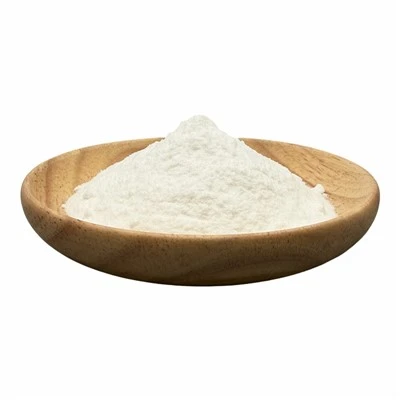
First, let’s cut to the basics: your wastewater’s microbes are the workers here. They need carbon (that’s the “food” they break down from stuff like food scraps or industrial effluent), nitrogen, and phosphorus to do their job—like, super specific ratios, think 100 parts carbon to 5 parts nitrogen and 1 part phosphorus. A lot of municipal or industrial plants run low on one or both nutrients, and that slows ‘em right down. Additives are just a concentrated mix of those missing nutrients, tailored to your specific wastewater, not a one-size-fits-all bottle of fertilizer.
Now, how long to work? It depends almost entirely on three things: what kind of treatment you’re running, how messed up your microbial community was before adding the stuff, and how you dose it. Let’s start with the most common scenario: conventional activated sludge (CAS) plants, which are the backbone of most mid-sized municipal facilities. If your issue is a mild nutrient deficiency—say, your lab tests show total nitrogen is hovering at 2 mg/L when you need it at 4 mg/L for microbes—you’ll start to see a difference in 24 to 48 hours. Here’s why: those microbes already in your aeration basins aren’t dormant; they’re just working at half-speed. Adding a quick-release nutrient mix (that’s what most of our go-to additives are, by the way) gives ‘em exactly what they need to ramp up respiration, break down BOD faster, and start multiplying. You’ll see it in your effluent BOD numbers first—usually that drops 10-15% in the first two days—then ammonia will start coming down after that, because the nitrifying bugs (the ones that turn ammonia into nitrate) were probably the most nutrient-starved.
But if you’re dealing with a really messed-up microbial community? That’s when the timeline shifts, and it’s not your fault. I’ve been on calls with plant managers who had a slug of industrial wastewater hit their system, killed 30-40% of their nitrifying bugs, and they’re left with a sludge that’s thin, foaming, and can’t keep up. In that case, it’s not just adding nutrients—it’s re-building the entire community, and that takes time. Quick-release additives will still help the existing microbes bounce back in 3-5 days, but if you need full nitrification back (like, ammonia below 1 mg/L), you’re looking at 10 to 14 days. Why? Nitrifying bugs are slow growers—they only double in number every 12 to 24 hours, compared to heterotrophs (the BOD-eating ones) that double every 2 to 6 hours. It’s like planting a garden: if all your existing plants died, you don’t get a full lawn in 2 days. You gotta wait for new ones to sprout, and nutrients just help ‘em grow faster, not overnight.
Then there’s trickling filters or attached growth systems—those are the ones with the biofilm slime on rocks or plastic media, instead of suspended sludge. For those, the timeline is a little longer, usually 3 to 7 days to see changes. Why? The biofilm is a thick, dense layer, so the nutrients have to diffuse through it, and the microbes inside grow slower than suspended ones. If you dose incorrectly—like dumping a huge amount all at once instead of splitting it into smaller doses—you might even slow it down. Microbes can only take so much at a time, just like you can’t eat a whole pizza in one bite without cramping. We usually tell clients to dose 2-3 times a day for the first week, not one big dump, to avoid wasting product and letting nutrients wash out before the microbes use ‘em.
Now, let’s talk about what “working” actually means, because that’s where a lot of people get tripped up. If you think “working” is effluent BOD below 30 mg/L and ammonia below 1 mg/L, that’s a two-week timeline for a lot of plants. If you think it’s just less foaming, that’s in 2-3 days. I had a client in Ohio a couple years back who was dealing with constant foaming that made their clarifiers overflow, and they thought the additive wasn’t working because BOD didn’t change for four days. Turns out, the foaming was from a nutrient imbalance that spiked filamentous bacteria, so once we fixed the ratio, the foam started going down in 48 hours—we just didn’t test for filament counts until day three. That’s why we always tell people to watch multiple parameters, not just one.
Another big factor: temperature. Wastewater microbes are cold-blooded, basically. In the winter, when plant water temps drop below 15°C (59°F), their metabolism slows way down. So if you’re adding nutrients in January, don’t expect the same speed as July. I’ve seen winter times where it takes 50% longer—so that 2-day improvement in summer becomes 3 days in winter. If you’re in a super cold climate, you might need a slower-release additive for winter, because quick-release might just get trapped in the cold sludge instead of being used right away. That’s why we don’t push the same product for Minnesota as we do for Texas—one size never fits all.
Wait, let’s also bust a common myth: some people think more nutrient means faster results. Nah, more doesn’t equal better. If you dose twice what you need, you’re just wasting money, and excess nitrogen can actually cause issues in effluent (like too much total nitrogen, which violates limits in a lot of states). We do site-specific testing for every client before we recommend a dose rate—usually a jar test, where we take a sample of their sludge and wastewater, add different amounts of our additive, and track BOD drop over 48 hours. That takes a couple days, but it saves you from guessing and wasting product. I’ve had clients who tried to cut corners by skipping the jar test, dosed way too much, and ended up with a sludge that bulking up because of excess nitrogen—cost them thousands in extra disposal costs.
So, let’s wrap this up with a quick timeline cheat sheet, so you can stop staring at your basins wondering:
- Mild nutrient deficiency (all microbes mostly alive, temp above 18°C): 24-48 hours to see BOD/ammonia improvement
- Severe nutrient loss (after a toxic slug, cold temps, old system): 7-14 days for full nitrification recovery
- Attached growth systems (trickling filters, rotating biological contactors): 3-7 days
- Winter (temp below 15°C): add 2-3 days to all timelines
Now, if you’re still not sure what’s going on with your system, or if you’ve tried additives before and nothing stuck, that’s why we’re here. We don’t just send you a bucket and ghost you—we’ll help you test your wastewater, figure out if your nutrient ratio is off, tweak your dose schedule, and even troubleshoot if something goes sideways (like foaming that gets worse, or sludge thinning too much). A lot of people see nutrient additives as a quick fix, but really, they’re a tool to get your microbes working like they’re supposed to—so you hit your permits, keep your plant running smooth, and don’t lose sleep over effluent results.
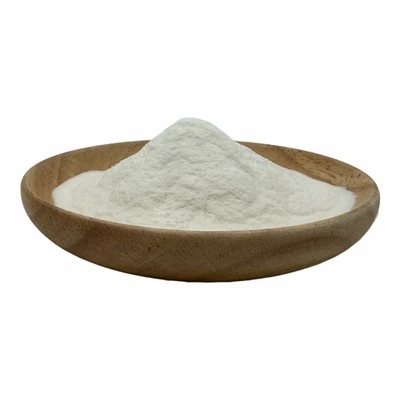
If you’re ready to stop guessing how long it’ll take for your system to perform, or just want to run a quick test to check your nutrient levels, we can connect you to our team for a chat. No sales pitches, just straight talk about what’s going on with your wastewater.
Defoamer References
- Metcalf & Eddy, Inc. (2014). Wastewater Engineering: Treatment and Reuse, 5th Edition. McGraw-Hill Education.
- U.S. Environmental Protection Agency (EPA). (2020). Nutrient Control for Wastewater Treatment Plants. EPA 832-F-20-004.
- Tchobanoglous, G., Burton, F. L., & Stensel, H. D. (2003). Wastewater Treatment: Principles and Practice. John Wiley & Sons.
- Water Environment Federation (WEF). (2018). Nutrient Management in Wastewater Systems: A Practical Guide. WEF Press.
Henan Ovation Envioronment Protection Technology Co., Ltd.
As one of the most professional wastewater nutrient additive manufacturers and suppliers in China, our products have good reputation in the market. Please feel free to wholesale high quality wastewater nutrient additive in stock here and get quotation from our factory. For price consultation, contact us.
Address: No.305 Jinshui Road, Future Road Street, Jinshui District, Zhengzhou City, Henan Province
E-mail: service@ovationeco.com
WebSite: https://www.ovationeco.com/
