If you’ve ever driven down a highway or stood beneath a massive transmission line cutting through the sky, you’ve likely glanced up at the tall, steel-framed structures holding those wires: tension towers, the unsung workhorses of the electrical grid. For as long as I’ve been in the tension tower supply business—nearly 12 years now—my team and I have never cut corners on safety. These towers don’t just hold wires up; they carry hundreds of thousands of volts across hundreds of miles, and if they fail, the consequences aren’t just a power outage. They’re dangerous, costly, and can disrupt entire communities for days or even weeks. That’s why every tension tower we manufacture goes through a rigorous, multi-layered testing process, far beyond the basic requirements set by national energy regulators. Let me walk you through what that testing looks like, from the minute steel arrives at our yard to the moment a tower is bolted into place for a utility. Tension Towers
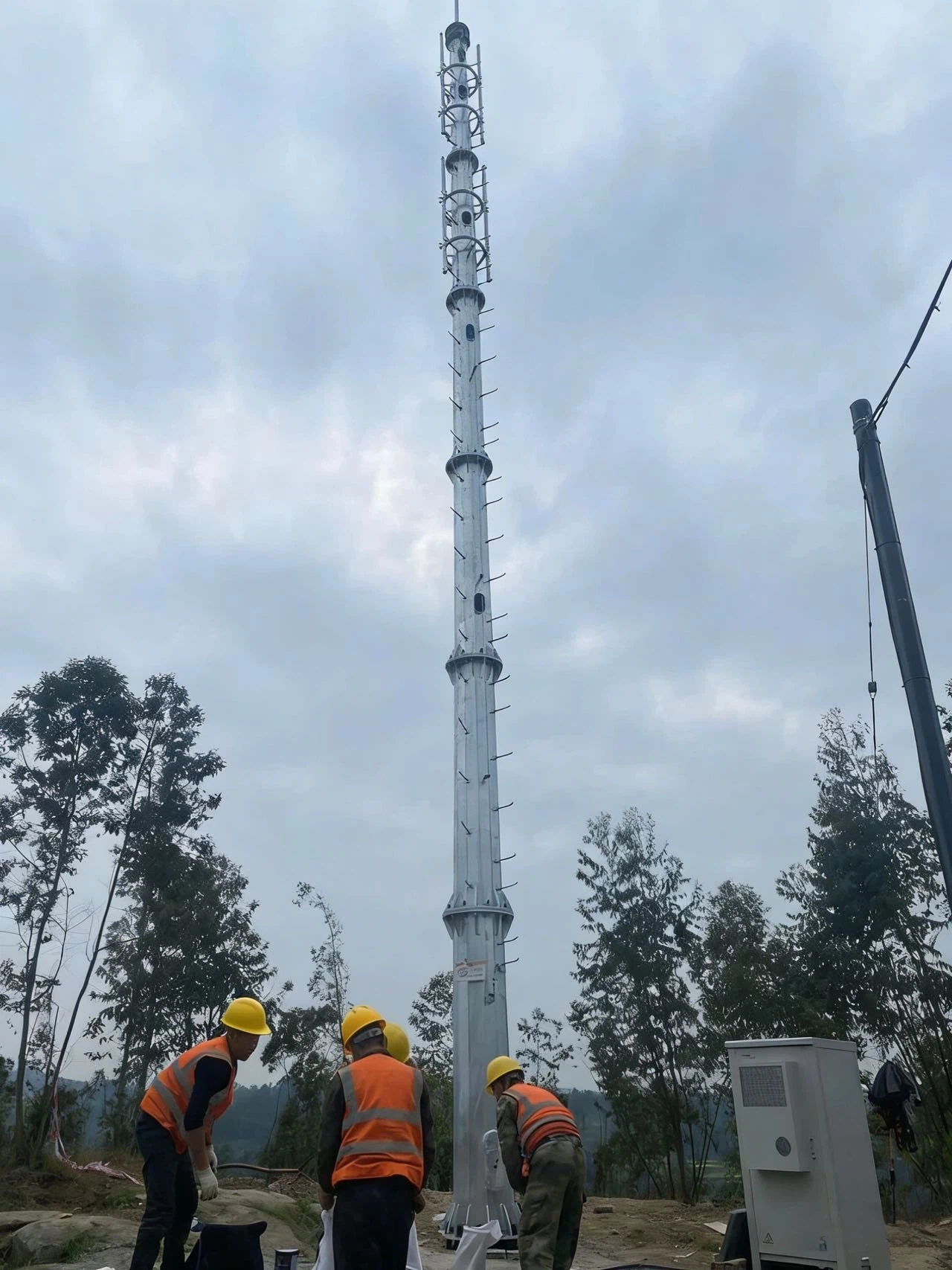
First, before any tower is even assembled, we start at the source: the steel itself. Tension towers are made of high-strength structural steel, usually Grade 50 or Grade 60, and the quality of that steel dictates everything from how much weight a tower can hold to how it performs in rain, snow, or extreme heat. Last year, we had a supplier send a batch of steel that failed a quick chemical composition test—our lab team caught it right away, because the carbon content was 0.2% over the acceptable limit. That small difference would have made the steel 15% weaker, and a tower made from it would have buckled under the tension of high-voltage lines during a winter ice storm. So first up is non-destructive testing (NDT) on raw materials: we use ultrasonic tests to check for hidden cracks in steel beams, magnetic particle testing to spot surface flaws, and tensile strength tests in our on-site lab to measure how much force a piece of steel can take before breaking. We reject any batch that doesn’t meet our standards, no exceptions. I’ve had utility clients push us to cut corners on material testing to shave a few weeks off their project timeline, but I always tell them: a tower that fails isn’t a tower at all—it’s a liability.
Once a steel tower is fabricated, we move to static load testing, the most critical step in proving a tower can do its job. Static load testing isn’t just stacking weight on a tower; it’s replicating every force a tower will ever face in the real world. A tension tower has two main loads: the vertical load from the weight of the transmission wires themselves, and the horizontal load from the tension of those wires pulling sideways, plus wind or ice. For our tests, we set up a tower in a specially built outdoor test frame—we have a 120-foot tall test facility on our yard that’s one of the largest in the region. We attach steel cables to the tower’s cross-arms, simulating the weight of transmission lines, and pull with hydraulic jacks to apply a load 1.5 times the maximum the tower is designed to carry. That’s called an ultimate load test, and we hold it there for 24 hours to make sure the tower doesn’t bend, crack, or shift. Last year, a prototype we were testing for a project in the Rockies failed this step: the base flange of the tower bent at 1.2 times the design load. We went back to the drawing board, reinforced the base with extra steel gussets, and retested until it held up to 1.8 times the design load. That extra margin isn’t just a requirement—it’s how we make sure a tower survives a 100-year storm, not just the average one.
We also test for dynamic loads, because real-world forces aren’t static. Wind gusts, ice shedding, and even minor earthquakes can shake a tower, and it has to absorb that movement without failing. For dynamic testing, we mount a completed tower on vibration pads to simulate ground movement, then use a series of hydraulic shakers to apply side-to-side and up-and-down forces that match the seismic activity or wind patterns of the region where the tower will be installed. For example, towers going to the Pacific Northwest, where earthquakes are common, get extra testing for lateral forces during a 7.0 magnitude quake. We also do ice load testing, which is a big deal for our clients in northern states. We spray the tower’s arms and legs with water that freezes into a 1-inch thick layer of ice, then add tension from simulated wires to see how the tower holds up. A few years ago, we had a client in Minnesota ask us to test a tower for 1.5 inches of ice, and it passed, but we tested it for 2 inches anyway—just to be safe. That tower is still standing after the 2021 ice storm that knocked out thousands of other structures in the area.
Corrosion testing is another step we never skip, because a tension tower that rusts is a tower that will fail long before its design life (which is 50 years, by the way). Most tension towers are hot-dip galvanized after fabrication, a process where we dip the entire steel structure into molten zinc to create a protective coating. But we don’t just dip it and ship it out. We do salt spray testing in our lab, where we place a small sample of the galvanized steel in a chamber that sprays salt water 24/7 for 1,000 hours—equivalent to 10 years of exposure to coastal salt air or road salt in winter. If the zinc coating starts to wear through before 1,000 hours, we send the tower back to re-galvanize it. We also test the adhesion of the zinc coating by scratching it with a metal probe; if the zinc flakes off easily, it didn’t bond properly, and the tower gets rejected. For towers going to coastal areas, we add an extra layer of weather-resistant paint on top of the galvanizing, and we test that paint for UV resistance too, because the sun can break down coatings over time.
Once a tower passes all those lab and physical tests, we move to field testing, right before installation. We don’t just drop a tower at a site and bolt it down; we do a pre-installation test erection on our yard to make sure all the parts fit together correctly. Tension towers are made of hundreds of steel pieces, and a misaligned bolt hole or a slightly bent beam can cause huge problems when they’re installed 100 feet in the air. We put the whole tower together on our concrete pad, tighten every bolt to the exact torque specified, and check every joint with a laser level to make sure it’s straight. Last year, we had a tower that had a misaligned cross-arm; our team caught it during pre-erection, instead of the construction crew having to fix it at the site, which would have added $15,000 in labor costs and delayed the project a week. That pre-installation step isn’t mandatory by most regulators, but it’s saved our clients thousands of dollars and a lot of hassle, and it’s part of why we’ve built a reputation for reliability.
I know some people think all this testing is overkill, that a tower is just a big steel pole. But last winter, when a ice storm knocked down three tension towers from a competitor (we later found out they’d skipped the ice load test on their latest batch), our towers stayed standing. We got 12 emergency calls from utility companies that week, asking if we could send extra towers to replace the failed ones. That’s when I remember why we do every test: safety isn’t just a buzzword, it’s the reason our business exists. A failed tower doesn’t just ruin a project—it can leave a small town without power during a cold snap, or cut off electricity to a hospital. That’s the responsibility we take seriously, every single day.
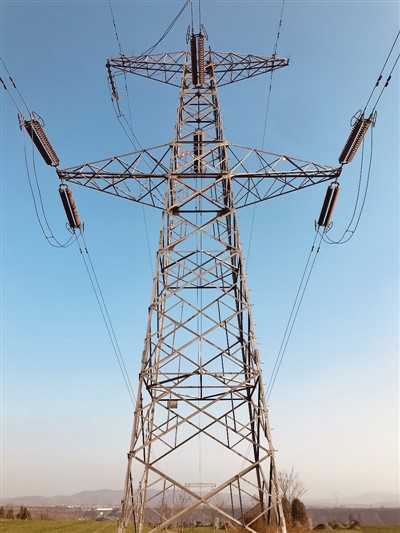
At the end of the day, every tension tower we produce has a little piece of my team in it. We’re not just suppliers; we’re people who live and work in the communities our towers serve, and we want the structures we build to stand for decades, protecting the power that keeps those communities running. If you’re a utility company or an energy project manager looking for tension towers that don’t cut corners on safety, we’d love to talk through your needs, walk you through our testing processes, and find the right solution for your project.
Overhead Line Tower References
- North American Electric Reliability Corporation (NERC). Tension Tower Design and Testing Standards. 2022.
- American Society of Civil Engineers (ASCE). Load and Resistance Factor Design (LRFD) for Steel Transmission Structures. 2019.
- International Organization for Standardization (ISO). 1461: Hot-Dip Galvanized Coatings on Fabricated Steel Products – Specifications and Test Methods. 2018.
- Federal Energy Regulatory Commission (FERC). Safety Standards for Overhead Transmission Lines. 2021.
Hebei Yifeng Steel Structure Co., Ltd.
As one of the most professional tension towers manufacturers and suppliers in China, we offer a wide range of products with superior quality. Please feel free to buy cost-efficient tension towers for sale here from our factory. Contact us for more details.
Address: Guangchuan Town Industrial Zone, Jing County, Hengshui City, Hebei Province
E-mail: hbyfgjg@163.com
WebSite: https://www.yf-powertowers.com/
