Hey there, fellow tech hobbyists, contractors, and small business owners—if you’ve ever stood in your garage, staring at a pile of electric wire rolls, wondering, “Did I buy way too much… or not enough?” then this post is for you. I’ve been in the electric wire game for over a decade now, so trust me when I say this is one of the most common questions I get from customers, and it’s also one where cutting corners (or overbuying) can end up costing you time, money, and even safety down the line. Let’s break down exactly how to pick the right electric wire length, no fancy engineering degree required. Electric Wire
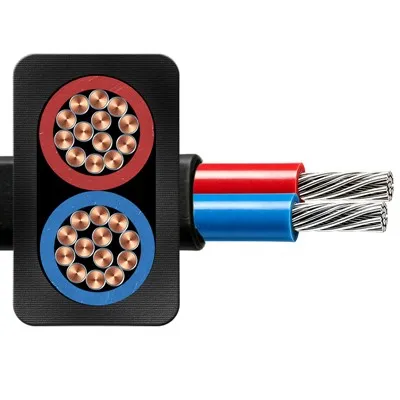
First off, let’s get one thing straight: there’s no one-size-fits-all answer here. The right length depends on three big factors: your specific project, the type of wire you’re using, and some hard-and-fast rules that keep your setup safe. I’ve seen folks grab a 50-foot roll because it’s cheaper than a 25-foot one, only to have extra wire coiled up in a corner where it’s at risk of overheating (thanks to all that tangled metal) or accidentally nicked later. On the flip side, I’ve watched an electrician friend run a 10-foot cable for a 8-foot job, only to have his team have to cut an extra 3 feet because he didn’t account for wall studs or outlet spacing. So let’s start with the basics that’ll help you avoid both mistakes.
Let’s start with mapping your space. Before you even touch a wire roll, pull out a tape measure and a notebook (or your phone notes, no judgment) to sketch out exactly where every wire needs to go. For a simple room rewiring, mark the location of each outlet, light fixture, and breaker box. Don’t just measure the straight line between two points—add 6 to 12 inches of extra wire for each connection. Wait, why? Because outlets aren’t usually dead-center in walls, and you need slack to run the wire through walls, around corners, and to screw into the back of switches without stretching it. I once had a customer come back complaining his new lights wouldn’t turn on, and it turned out he’d cut the wire exactly 4 feet between the switch and fixture—no slack, so when he tried to hook it up, the wire pulled loose from the terminal. That 6 inches might seem tiny, but it’s a lifesaver.
Next up: the type of wire you’re using matters more than you think. Not all electric wire is the same, and each type has its own rules for length. For example, NM (non-metallic) cable, the stuff you see for household wiring, is usually sold in 25-foot, 50-foot, and 100-foot rolls. It’s flexible, so the slack I mentioned earlier doesn’t add too much bulk, but if you’re running it through unfinished walls or attics, you might need to add a little more—like 12 to 18 inches per run, because you have to pull it through holes that aren’t perfectly aligned. Then there’s THHN/THWN wire, which is the solid copper wire used for inside walls, appliances, or outdoor connections (the THWN part means it’s weather-resistant). This stuff is stiffer, so you need even more slack—around 12 to 24 inches—because bending it too tight can damage the insulation, which is a fire hazard. I always tell my customers: if you’re using THHN, err on the side of a little extra length. It’s way cheaper to cut a few feet off a roll than to run back to the store mid-project.
Another big factor: voltage drop. This is the secret sauce that a lot of newbies miss, and it’s super important. Voltage drop happens when electricity flows through a wire, and some of it is lost as heat. The longer the wire, the more voltage drops—too much, and your lights might flicker, your appliances might run inefficiently, or even stop working entirely. For residential projects, the NEC (National Electrical Code) says you shouldn’t have more than a 3% voltage drop for branch circuits. Let’s put that in plain English: if you’re running a 120V circuit, 3% is 3.6V. To avoid going over that, you can use a simple rule: for 14-gauge wire (the thin one for lights and small outlets), don’t run it more than 50 feet from the breaker. For 12-gauge (thicker, for appliances like refrigerators), that goes up to 65 feet, and 10-gauge (even thicker, for large appliances or outdoor feeds) can go up to 100 feet. Wait, so does that mean you need to add that maximum distance to your length? Kind of—if your straight-line run is 40 feet, you’ll need enough wire to cover that plus slack, and make sure the total length doesn’t exceed those numbers. I’ve had customers run a 40-gauge? No, wait, 14-gauge—run 60 feet of 14-gauge wire, and suddenly their new ceiling fan is so dim it’s almost off. That’s exactly voltage drop, and it’s avoidable with a quick check.
What about larger projects, like a whole-house remodel, a workshop, or even a tiny home? For these, you can’t just measure each room separately. You need to plan your main runs from the breaker box first. Let’s say your breaker box is in the garage, and you’re running wires to the kitchen, bedroom, and bathroom. Measure from the box to the farthest point in each room, add your slack, and then add 10 to 15 feet extra for connections at the box. That way, if you need to adjust a light or add an outlet later, you have extra wire waiting. I recently helped a customer with a tiny home build, and he tried to save money by buying all 25-foot NM rolls. He ended up needing three extra rolls because he didn’t account for the corners in the kitchen, and by the time he was done, he’d spent more than if he’d bought a 100-foot roll in the first place. Lesson learned: for larger projects, buying a longer roll usually saves you time and cash, even if the upfront cost is a little higher.
Now, let’s talk about what not to do. First, don’t just estimate based on square footage. A 10×10 room might seem like it needs 40 feet of wire, but if the outlets are on opposite walls and the switch is in the middle, that’s more like 60 feet. Second, don’t ignore outdoor or underground wiring. If you’re running wire outside (like for a patio light), you need UF (underground feeder) cable, not regular NM. This stuff is thicker, so you’ll need to add a little more slack, but also, if you’re burying it, you should add 2 to 3 feet extra to account for any digging mistakes—like if you accidentally dig a little deeper than planned. Third, don’t reuse old wire. Even if the length seems right, old insulation can be brittle, so it’s better to run new wire with the correct length instead of patching old stuff.
Wait, what if you’re working with small, tight spaces, like a crawl space or a finished wall? In these cases, you can’t have too much extra wire—coiled wire can build up heat, which is a fire risk. So for these, stick to just the minimum slack (6 inches), and measure every inch carefully. I always tell customers to lay the wire out along the path first before cutting it. That way, you can see exactly how much you need, and you won’t end up with a pile of coiled wire inside a wall where no one can see it. I’ve seen that go wrong more times than I can count: a coiled wire in a wall gets warm, starts melting the insulation, and before you know it, there’s a fire. So that’s a big one—no extra slack in tight spaces.
Let’s run through a quick example to make this real. Say you’re installing a new outlet in your living room. The distance between your existing outlet and the new one is 8 feet, straight line. You’re using 14-gauge NM cable, for indoor use. So that’s 8 feet, plus 6 inches of slack at each end (that’s 1 foot total), so 9 feet. Wait, but check the voltage drop: 14-gauge can go up to 50 feet, so 9 is way under that, perfect. So you don’t need to add anything else. Easy, right? If it was a 45-foot run, though, that’s still under 50 feet, so no problem. If it was 55 feet, you’d want to use 12-gauge to avoid voltage drop, which means you might not even need extra length because 12-gauge can go further.
Now, what about when you’re not sure? That’s where I come in. As someone who’s sold electric wire for years, I’ve talked so many customers off the ledge when they’re not sure how much to get. I always say it’s better to get a little extra than too little. But here’s the thing: you don’t want to get 10 times more than you need, either. If you’re only doing a small project (like a single light fixture), a 25-foot roll is usually enough. If you’re doing a whole room, go for 50 feet. If it’s a big project, ask a pro, or shoot me a message—wait, don’t think I’m gonna plug my own stuff, but seriously, if you’re stuck, just reach out. No pressure, I’ll help you figure it out.
Wait, let’s clear up a common myth: some people think you can just add 10% extra to your measurements, and that’s it. That works for small projects, but for larger ones, that 10% might not account for corners, outlets, or that voltage drop rule. So don’t just rely on that 10% tip unless it’s a tiny, straightforward job. For anything more complex, sketching the path and adding slack per connection is way more accurate.
Another thing: wire gauge and length go hand in hand. Thicker wire (lower gauge number, like 10-gauge) can run longer without voltage drop, so if you have a spot that’s further from the breaker, you might not need a longer wire—just a thicker one. That’s a key point. So it’s not just about how long the wire is, but how thick it is, and how far it has to go. I’ve had customers come in thinking they need a 100-foot roll because their run is 70 feet, but really, a 50-foot 10-gauge roll works just as well, and it’s cheaper. It’s all about balancing length, gauge, and your project needs.
Let’s wrap this up with a quick checklist so you don’t forget anything:
- Measure every straight run, then add 6–12 inches of slack per connection (more for stiffer wire like THHN).
- Check voltage drop rules for your wire gauge to make sure you’re not exceeding safe lengths.
- For tight spaces (crawl walls, finished walls), skip extra slack to avoid heat buildup.
- For outdoor/underground jobs, use UF cable and add 2–3 feet extra for digging mishaps.
- If you’re not sure, lay the wire out along the path first to confirm the length before cutting.

At the end of the day, choosing the right electric wire length is all about planning a little, trusting the basics, and not being afraid to ask for help if you need it. I’ve seen so many people stress over getting the wrong length, but it’s way easier than it sounds once you break it down. If you’re working on a project and still have questions, or you need to stock up on the right wire, don’t hesitate to reach out. We’re here to help you get the job done right, safely, and without wasting money on extra rolls you don’t need.
RF Coaxial Cable References
National Electrical Code (NEC) Article 310.15 (Conductor Ampacity and Voltage Drop Requirements)
Electrical Construction Maintenance Magazine, “Voltage Drop Calculations for Residential Wiring Projects” (2022)
Underwriters Laboratories (UL) Standard for Electric Wire and Cable (UL 83, Non-Metallic Sheathed Cable)
Yangzhou Huayu Cable Co., Ltd.
Yangzhou Huayu Cable Co., Ltd. is one of the most professional electric wire manufacturers and suppliers in China, also supports customized service with low price. Please feel free to wholesale advanced electric wire made in China here from our factory. Contact us for pricelist.
Address: No.9 Jingang Road, Yangzhou City, Jiangsu Province, China
E-mail: info@huayucabletech.com
WebSite: https://www.huayucabletech.com/
