If you’ve ever stepped into an elevator, felt that quiet hum as it glides between floors, and never once paused to consider how it stays safe—you’re not alone. Elevator safety isn’t just a happy accident. It’s the product of hundreds of meticulously engineered parts, each designed to prevent falls, stops mid-ride, or any of the rare but high-stakes risks that come with vertical travel. As someone who’s spent years supplying OEM and replacement parts for OTIS elevators, I’ve seen firsthand how even a single small component can mean the difference between a routine trip and an emergency. Today, I want to break down the core OTIS-specific safety parts that keep these systems running, why they matter, and how we as a supplier make sure every part we provide meets OTIS’s exacting standards. Elevator Parts for OTIS

First, let’s ground this: OTIS isn’t just an elevator brand—it’s the company that invented the safety elevator back in 1852, when Elisha Otis demonstrated a brake system that prevented the car from plummeting if the hoist ropes failed. That foundational innovation set a global standard, and every safety part OTIS uses traces back to that original, customer-focused design philosophy. Today, OTIS’s safety components are tailored to their specific elevator models—from the small residential units installed in apartment buildings to the high-speed elevators that ferry passengers to skyscraper observation decks—so a part made for an OTIS Gen2 machine won’t work the same way in an older OTIS Traction model. That’s why specificity isn’t just a buzzword here; it’s non-negotiable.
Let’s start with the parts that stop the elevator if something goes wrong: the overspeed governors. This is one of the most critical safety systems in any elevator, and OTIS’s version is calibrated to trigger at a precise speed—usually around 15-20% above the elevator’s rated speed—before the car can reach dangerous velocity. The governor itself is a weighted pulley that runs on the hoist rope; if the rope speeds up too much, the weights fly outward, engaging a mechanism that pulls a second rope tight, which in turn triggers the safeties. OTIS’s governors are designed to be tamper-proof, so they can’t be adjusted to override the speed limit, and we as a supplier source only governors that undergo OTIS’s third-party testing to confirm they activate at the exact threshold specified for each model. A common mistake non-OEM suppliers make is offering generic governors that don’t align with OTIS’s calibration, leading to systems that either trigger too early (causing unnecessary rides interruptions) or too late (posing a fall risk).
Next, those safeties I mentioned—they’re the fail-safe brakes that clamp onto the guide rails to stop the elevator car. OTIS’s safeties are hydraulically or spring-loaded, depending on the load capacity. For example, in a 2,000-pound passenger elevator, the safeties use spring force to engage, even if power cuts out, so the brake activates without relying on electricity. What makes OTIS’s safeties unique is their ability to stop the car smoothly, not with a jolt that could injure passengers or damage the car structure. We supply OTIS-specific safeties that are precision-machined to match the guide rail width and profile for each model; if a safety is off by even a fraction of a millimeter, it won’t clamp correctly, leading to slippage during a stop. I’ve seen this play out firsthand: a client once tried to use a generic safety in their OTIS 4000 series, and it slipped during a test stop, requiring a full replacement with our OTIS-certified part to get their system back to code.
Then there’s the door safety system, which is the most visible safety feature for passengers, but still relies on specialized OTIS parts. Elevator doors are responsible for more elevator-related incidents than any other component, mostly because of misaligned sensors or faulty door operators. OTIS’s door safety parts include two key components: the door edge sensor and the door lock. The door edge sensor is a rubber strip along the door’s leading edge; if it touches an object (or a person’s hand, for example), it sends a signal to the control system to reverse the door. OTIS’s edge sensors are calibrated to be sensitive enough to detect a thin piece of paper, but not so sensitive that they reverse for a gust of wind. The door lock, on the other hand, ensures the car doors can’t open unless the car is perfectly aligned with the floor landing—this prevents the common scenario where someone could step into a gap between the car and the floor. OTIS’s door locks have a mechanical interlock that only releases when the car is level, and they also have an electrical switch that sends a signal to the controller if the lock is not engaged. We supply both the sensors and locks, and we make sure they’re compatible with OTIS’s digital control systems, so they can communicate error codes to building maintenance teams quickly if there’s a malfunction.
Another often-overlooked part is the buffer at the bottom of the elevator shaft. Buffers are shock absorbers that catch the elevator car if it overruns the lowest (or highest) floor—something that almost never happens, but is a critical last line of defense. OTIS uses two types of buffers: oil buffers for heavy-duty elevators and spring buffers for lighter residential models. The oil buffers are designed to dissipate energy gradually, so if a car hits the buffer at full speed, it slows down without crashing. What’s unique about OTIS’s buffers is their size: even for a small residential elevator, the buffer is sized specifically to handle the car’s maximum load, so if the car is full, the buffer still works as intended. I once worked with a hotel that had an OTIS express elevator; their old buffer was a generic part that was too small, and during a routine inspection, inspectors flagged it as a code violation. We replaced it with an OTIS-specific buffer, and it passed with flying colors because it was calibrated for the 5,000-pound load the elevator carries during peak hours.
Don’t forget the control system’s safety relays, either. These are small, electrical parts that act as the eyes and ears of the elevator, checking every safety component before the elevator can move. For example, before the door can close, the relay verifies that the door lock is engaged, the edge sensor is clear, and the car is level. If any of these checks fail, the relay cuts power to the elevator’s motor, so it can’t move. OTIS’s safety relays are designed to be redundant—meaning if one relay fails, a second one takes over—so there’s no single point of failure. We supply these relays as well, and a big part of our service is helping maintenance teams identify which relay is causing a fault, because OTIS’s models use specific part numbers that aren’t interchangeable with other brands.
Now, why does this matter for you, whether you’re a building manager, a maintenance technician, or a property owner? Using non-OTIS parts might seem like a way to save money upfront, but it’s a false economy. OTIS’s safety parts are engineered to work together as a system—so a governor is calibrated for its specific safeties, door locks are designed to pair with their edge sensors, and buffers are sized to match the load the elevator regularly carries. If you mix in a generic part, you’re breaking that system, and it could lead to costly repairs, downtime, or even safety violations. I’ve had clients come to us after using a cheap, non-OTIS part that caused their elevator to break down for three days, costing them thousands in lost revenue from a commercial building. Replacing that wrong part with our OTIS-certified one fixed the issue in a few hours.
As a supplier of OTIS elevator parts, our job isn’t just to sell components—it’s to make sure those components work as they were intended. That means we stock a full range of safety parts: from small door switches to large overspeed governors, each tested to meet OTIS’s original specifications, not just generic industry standards. We also work closely with maintenance teams to help them find the right part for their model, whether it’s a 10-year-old OTIS 2000 or a brand-new OTIS SkyRise high-speed elevator. We understand that elevator downtime is stressful, so we prioritize fast shipping and clear communication, so you can get the part you need when you need it.
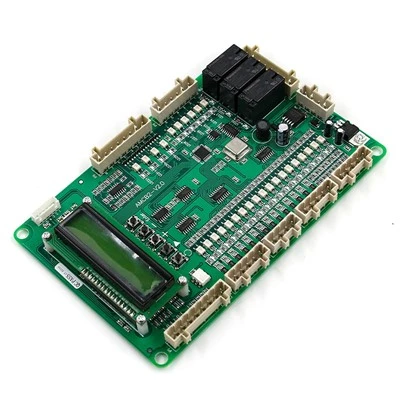
If you’re a building manager looking to update your elevator’s safety system, a technician needing a replacement part to pass an inspection, or a property owner who wants to make sure their elevators are safe for tenants, we’re here to help. Every part we supply is authentic, tested, and compatible with OTIS equipment, so you don’t have to worry about whether it will work or whether it meets local safety codes. Don’t cut corners when it comes to elevator safety—reach out to us to discuss your specific needs, and we’ll help you find the right OTIS safety parts to keep your elevators running smoothly and safely.
Elevator Parts for OTIS References:
- Otis Elevator Company. (2022). Safety System Design Principles for Modern Elevators. Otis Global Engineering Standards.
- National Elevator Industry, Inc. (2023). Elevator Safety Components and Code Compliance. NEI Technical Bulletin 17-03.
- Federal Elevator Safety Act of 2010. U.S. Department of Labor, Occupational Safety and Health Administration.
- Otis Gen2 Elevator Series. (2021). Component Specification Manual for Safety Systems. Otis Parts Division Documentation.
- International Code Council. (2022). International Building Code: Elevator and Escalator Safety Requirements. Chapter 30.
Shaanxi Nona Elevator Parts Co., Ltd.
As one of the leading elevator parts for otis manufacturers and suppliers in China, we warmly welcome you to wholesale bulk elevator parts for otis in stock here from our factory. All elevator parts are with high quality and competitive price. For pricelist, contact us now.
Address: No.1502 Ronghao Building, Xi’an City, Shaanxi Province, China
E-mail: candice@nonaelevator.com
WebSite: https://www.nonaelevatorparts.com/
