Hey there, let’s talk about something I get asked all the time from winemakers just starting out or looking to level up their bottling setup: what’s a pressure wine filler machine? And why should you care, especially if you’re shipping wine commercially, not just filling a few cases for your own winery? Wine Filler Machine
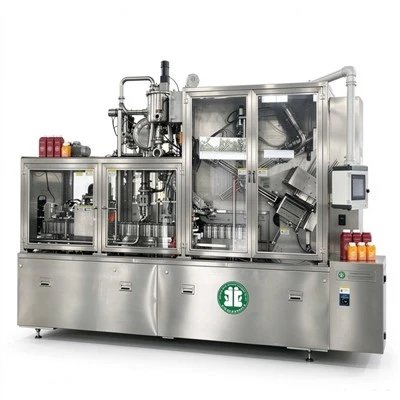
First, let’s keep it real—before I got into selling these machines, I was the guy in the back of a small family winery, hand-filling bottles with a funnel and a rubber hose, panicking because every third bottle had too much foam, or was underfilled, or I spilled half the bottle on the case. That works for 100 cases a week. Try 1,000, and you’ll see why a pressure filler isn’t just a “nice-to-have”—it’s a game-changer.
So, what exactly is it? Let’s break it down simple, no jargon. A pressure wine filler is a piece of bottling equipment designed to fill wine into bottles (or cans, or even kegs for draft wine) using controlled air pressure. Unlike gravity fillers, which just pour wine from a tank down into a bottle, or vacuum fillers, which suck air out first, pressure fillers work by pushing wine evenly into the bottle at a steady, consistent pressure. Here’s how that plays out in the real world.
When you’re filling wine, the big enemy is foam—also called “mousse” if you’re fancy, but I just call it a pain. Too much foam, and you end up with half the bottle’s worth of wine lost to the overflow tube, or worse, you have to wipe the bottle down, let it settle, and refill it, which slows everything way down. Pressure fillers fix this by matching the pressure inside the bottle to the pressure in the wine tank before the wine even touches the bottle. Wait, let me explain that part again—like, if you’ve ever shaken a soda can, opened it, and it foams all over, that’s because the pressure inside the can is higher than the room pressure. If you equalize the can’s pressure before opening, no foam. Same exact thing with wine, especially sparkling wine, but even still whites and reds that have some CO2 naturally from fermentation.
That equalization step is why pressure fillers are so reliable. The machine has two main chambers: a tank that holds the wine, sealed up so we can control the air pressure, and the filling heads that go into the bottle. When you place a bottle under a head, the machine first sends a small burst of compressed air into the bottle to match the pressure in the wine tank. No pressure difference, no foaming. Then, it opens a valve that lets wine flow into the bottle until it hits the right level—no guesswork. Some of our machines even have a level sensor, so if a bottle is off (like a crooked bottle, or a damaged one), it automatically rejects it, which cuts down on waste.
Now, let’s talk about who uses these, not just big commercial wineries. Yeah, the 500k-case a year winery uses them, but so do small craft wineries making 50 cases a month. Why? Because consistency sells. If you walk into a wine shop, and you pick up two bottles of the same cab, one’s 750ml exactly, the other’s 720ml, you’re gonna notice. Even if you don’t say it out loud, that inconsistency makes the wine feel less professional. A pressure filler gives you that exact same fill every single time, 200 bottles in a row, no mistakes. That’s huge for brand reputation.
Wait, let’s clear up a common mix-up: pressure fillers aren’t just for sparkling wine. A lot of new winemakers think, “I only make still wine, so I don’t need a pressure filler.” Nope. We’ve had clients who make small-batch still pinot noir swear by their pressure fillers because it works faster than gravity fillers, and the foam control is better even for still wine. Let’s do the math: a good pressure filler can fill 600 to 1,200 bottles an hour, depending on the model. Hand filling? You’re lucky to do 100 an hour, and that’s with a partner helping. So if you’re trying to meet orders for restaurants or wine shops, that speed is non-negotiable.
Also, another big plus: less oxidation. Wait, how? When you’re filling wine, if you pour it quickly from a height, it mixes with air, which can make the wine go bad faster, especially delicate whites. Pressure fillers fill the bottle from the bottom up, through the tube in the filling head. So the wine doesn’t splash or mix with air. That means your wine stays fresher longer, which is a massive deal if you’re shipping across the country or storing bottles for later release. We had a client last year who switched from a gravity filler to one of our pressure machines, and he told us his shelf life for white wines went up by 3 months because there was less oxygen in the bottle. That’s the kind of win you can’t ignore.
Now, let’s talk about the different types, because not all pressure fillers are the same. Some are semi-automatic, which means you load the bottles by hand, the machine runs the filling cycle, and then you unload them. That’s perfect for small to mid-sized wineries. Then there’s fully automatic, which connects to a bottle rinser and a corker/capper, so the whole line is automated—you just load empty bottles at the start, and finished, capped bottles come out the other end. Those are for bigger operations, but even semi-automatic models are a big step up from hand filling.
Wait, I should mention something I see new buyers get wrong: they think a pressure filler is super complicated, like a big industrial machine that needs an engineer to set up. Nah, most of the ones we sell are user-friendly. We train your team on how to adjust the pressure for different wines (you need lower pressure for light whites, higher for bold reds, way higher for sparkling), how to clean it, and how to fix small issues—no fancy degree needed. And they’re built to be cleaned easily, because wine equipment needs to be sanitized every time you switch grape varieties or wine types. You can take apart the filling heads, rinse them, no hidden crevices where mold can grow.
Let’s get real about costs for a second, because that’s a big question. A semi-automatic pressure filler for small wineries is way more affordable than you think—way less than a new forklift, for example. And the ROI? Let’s say you’re filling 500 cases a month, switching from hand filling. You’ll save at least 10 hours a week of labor, plus cut down on wine waste from foam or underfilled bottles. That pays for itself in 6 months, easy. For bigger wineries, the speed and consistency mean they can take on more orders without hiring extra staff, which is a big win.
Now, why buy from us? I’m not here to sell you a machine that’s too big or too small for your operation. I’ve been in this space for years, so I can tell you exactly what size and model fits your needs. A lot of suppliers will push the biggest, most expensive machine even if you only need 200 bottles an hour. I don’t do that. We’ve got models for every winery—from the tiny craft maker doing 10 cases a month to the big producer doing 10,000 cases a year.
Wait, let’s circle back to the original question: what is a pressure wine filler machine? At the end of the day, it’s not just a tool to fill bottles. It’s the thing that takes your wine from something you make in a garage or a small warehouse to a product that can be sold in stores, distributed to restaurants, and taken seriously by customers. It cuts down waste, saves time, improves quality, and helps you grow.
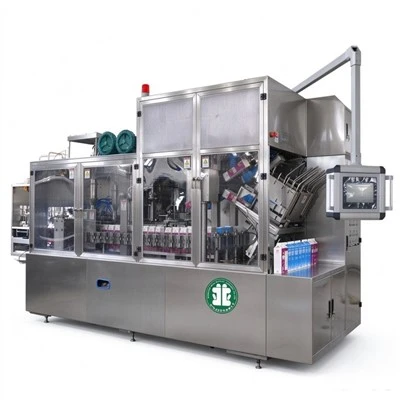
If you’re reading this and you’re thinking, “Yeah, that sounds like something we need, but I’m not sure which model is right, or how it works with our bottling line,” hit us up. I’m here to answer questions, no pressure. We can even send you a video of the machines in action, or arrange a test run if you’re local. Don’t waste another hour hand filling and dealing with foam mess—let’s get you set up with a machine that makes your bottling day way easier, and your wine way better.
Gable Top Carton Industrial Filling Machine Reference:
- Amerine, M. A., & Ough, C. S. (1980). Wine: Its Production and Analysis (3rd ed.). University of California Press.
- Boulton, R. B., et al. (1999). Principles and Practices of Winemaking. Chapman & Hall.
- Morrison, R. R. (2003). Bottling and Packaging for Wineries. Oenology Publications.
Shenyang Beiya Beverage Machinery Co., Ltd.
With abundant experience, we are one of the most professional wine filler machine manufacturers and suppliers in China. If you’re going to buy customized wine filler machine made in China, welcome to get quotation from our factory. For price consultation, contact us.
Address: No.2-1, Tongling Street, Yuhong District, Shenyang City, Liaoning Province, China
E-mail: market@sybeiya.com
WebSite: https://www.chinafilling.com/
