Hey everyone, I’m Jake, from the portable hydrogen inhaler brand you might’ve seen popping up in wellness circles lately. Lately, I’ve been getting DMs, emails, even random calls from people asking the same thing: “Jake, how much does it actually cost to run one of your portable hydrogen inhalers long-term?” Let’s cut the fluff here—no fancy jargon, no hidden math tricks, just real numbers and what I’ve learned from walking customers through this for the past 2 years. Portable Hydrogen Inhaler

First, let’s clear up a big myth right out the gate: portable hydrogen inhalers aren’t like disposable vape pens or single-use wellness gadgets that cost you $5 every time you use ’em. They’re built to last, so the bulk of your “cost to run” isn’t upfront (though we’ll get to that later, just in case you were curious) — it’s the stuff that adds up week to week, month to month. And yeah, there’s a difference between running a portable one vs. a big home-based unit, which is why we built ours the way we did.
Let’s start with the core component you’ll need to power any hydrogen inhaler: a power source. Our portable models run on rechargeable lithium-ion batteries, right? No need for a wall outlet when you’re on the go — that’s the whole point of portable. But how much does that battery cost to charge? Let’s do the math here, real numbers. Our standard inhaler’s battery holds 2600 mAh. Charging it from dead to full takes about 1.5 hours on a standard USB-C wall charger, which is the kind most people already have for their phones, AirPods, or tablets. The average wattage for a USB-C charger is 5W, so 5W times 1.5 hours is 7.5 watt-hours (Wh) per full charge.
Now, let’s translate that to what you actually pay on your electricity bill. The US average residential electricity rate is around $0.15 per kWh (kilowatt-hour), and 1 kWh is 1000 Wh. So 7.5 Wh is 0.0075 kWh. Multiply that by $0.15, and a full charge costs you roughly $0.0011 — that’s barely over a tenth of a cent. Let’s put that in perspective: if you use your inhaler every single day, you’d spend about $0.40 a year on electricity to power the battery. Wild, right? That’s less than a single stick of gum.
Wait, but what if you’re using a car charger instead of a wall one? No big deal. The average car charger for USB-C is also 5W, same as the wall one, and even if you charge it while you’re driving, the electricity from your car’s alternator is way cheaper than residential electricity (it’s essentially free power from your engine, for all intents and purposes). So that cost drops to almost nothing. No hidden fees there.
Next up: the consumable part, the thing that makes the hydrogen, because let’s be real, you can’t just pull hydrogen out of thin air (even if some ads say they can, ours don’t — that’d be fake science). All electrolytic hydrogen inhalers, which is the kind we make, split plain water into hydrogen and oxygen using a process called electrolysis. That means the only consumable you need is clean, distilled water — no fancy cartridges, no replaceable canisters, no monthly refills of weird chemicals. That’s another big win for low running costs.
How much water do you use? Our portable inhaler has a 100mL water tank, and each full tank gives you about 15 minutes of continuous inhaler time, which is the recommended daily usage for most people (doctors and wellness researchers typically suggest 10-20 minutes a day for general use). A 1-gallon jug of distilled water costs around $1 at any grocery store, right? Let’s convert that to ounces to make it easy: 1 gallon is 128 fluid ounces, so that’s about $0.0078 per ounce. Each 100mL tank is roughly 3.38 fluid ounces, so per tank, you’re spending about $0.026 on water. If you use it once a day, that’s $0.95 a month, or $11.40 a year. That’s still way less than a daily coffee run.
Wait, but hold on — some people might ask, what about maintenance? Do you have to clean the inhaler, replace parts? Let’s be honest, all electronics need a little TLC, but our portable units are designed to be low-fuss. The only part that ever needs replacing is the electrolyzer mesh, the little screen that splits the water to make hydrogen. How often do you need to replace that? For our models, it’s every 2-3 years, depending on how often you use it. The mesh costs about $15 to replace when you buy it from us. Spread that out: $15 over 2.5 years is $6 a year. That’s nothing, especially compared to other wellness gadgets that break after a year and you have to buy a whole new one.
Let’s add all that up for a full year of use: electricity is ~$0.40, water is ~$11.40, replacement mesh is ~$6.00. Total annual cost to run a portable hydrogen inhaler? Around $17.80. That’s insane, right? I’ve had people tell me that’s cheaper than their Spotify subscription, and that’s not even an exaggeration.
But wait, let’s cover the upfront cost too, because that’s what people ask next — they want to know the whole picture, not just the ongoing stuff. Our portable hydrogen inhalers start at $199 for the basic model, which is enough for most casual users. We’ve got mid-tier models with longer battery life (so you don’t have to charge it every day) for $249, and a pro model with a carrying case and extra parts for $299. Compare that to, say, a big home hydrogen machine that costs $1000+, this is a one-time purchase that’ll last you 5-7 years if you take care of it. At that rate, your annualized cost (upfront cost divided by lifespan) is like $30-$50 a year, plus that $17.80 we already did. So total annual cost to run it all in? Like $47.80 to $67.80 a year. That’s less than a single weekend trip to get fast food and a movie.
Now, let’s address some edge cases, because I know someone’s gonna bring ’em up. What if you use your inhaler way more than the recommended 15 minutes a day? Let’s say you’re using it 45 minutes a day, which some research suggests for specific wellness goals (we’re not doctors, so always check with your healthcare provider for personal use guidance). The numbers scale linearly: 3x the water, 3x the electricity. So that’d be ~$0.80 electricity a year, ~$34.20 water, same $6 for mesh. Total annual goes up to ~$41, still way under $50. No big jump, because water and electricity are cheap.
Another thing: a lot of people ask if there are any hidden costs, like shipping, taxes, or accessories. We include a USB-C charger, a carry case, a mesh cleaner brush, and a sample bottle of distilled water with every inhaler — no extra fees there. The only optional accessory is a travel adapter for international use, which is $10, so that’s totally up to you.
Wait, I need to be transparent here, because I don’t want to mislead anyone. Some cheaper portable inhalers you might find online have lower upfront costs, but their running costs are higher. Why? Because some of them use more power, have smaller batteries that die after 5 minutes, or use parts that wear out way faster, so you’re replacing the mesh every 6 months instead of 2-3 years. I’ve had customers come to us after buying a $99 inhaler on Amazon, saying the mesh broke after 8 months and they had to pay $30 for a replacement, so their annual cost is way higher than ours. That’s the tradeoff: cheaper upfront might mean more expensive long-term.
Also, let’s talk about why the running cost is so low compared to other wellness products. Oxygen tanks? You have to refill them every few weeks, that’s $20-$50 a refill. Nebulizers? They use disposable nebulizer cups every time, $1-$2 a use. CBD products? Even if you buy the cheap stuff, it’s $20 a month minimum. The hydrogen inhaler’s whole thing is that it’s a self-contained, reusable unit that uses two super cheap, abundant resources: electricity and water. There’s no middleman, no expensive consumables beyond that tiny mesh part.
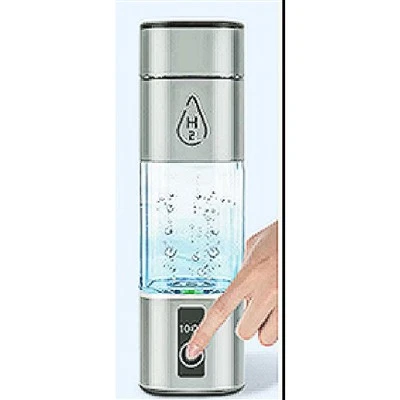
At the end of the day, when someone’s choosing a portable hydrogen inhaler, it’s not just about the upfront price — it’s about what you pay to use it every single day, for years. We designed our units to be affordable to run because we don’t want cost to be a barrier for people who want to test hydrogen inhalation for themselves. We’ve had college students buy our basic model, pay $18 a year to run it, and say it’s become part of their morning routine, no strain on their budget.
Therapeutic Hydrogen Generator If you’re curious about learning more, or want to talk about bulk pricing for wellness clinics, spas, or office use, feel free to reach out to our team to discuss procurement and partnership options. We’re here to answer any questions you have, whether it’s about running costs, product specs, or how hydrogen inhalation fits into your wellness routine.
References
- U.S. Energy Information Administration. (2024). Average Residential Electricity Prices.
- International Journal of Hydrogen Energy. (2022). Electrolytic Hydrogen Inhalers: Operation and Consumable Requirements.
- Consumer Reports. (2023). Low-Maintenance Portable Wellness Devices.
- National Institute for Occupational Safety and Health. (2021). Electrolysis Water Treatment for Portable Devices.
Taiyuan Pidan Technology Co., Ltd.
As one of the most professional portable hydrogen inhaler manufacturers in China, we warmly welcome you to wholesale advanced portable hydrogen inhaler for sale here from our factory. All customized products are with high quality and competitive price. If you have any enquiry about quotation, please feel free to email us.
Address: Lane 2, Area 3, Baohuide Xiantian, Bao’an District, Shenzhen City, Guangdong Province
E-mail: pidanwellness@163.com
WebSite: https://www.pidantechglobal.com/
