If you’ve ever walked through a precision parts manufacturing facility, you’ve probably spotted those shiny, uniform components—from small aerospace fasteners to dental implants, even automotive gearbox parts—that look too smooth to be finished with hand sanding or basic tumbling. As a magnetic polishing machine supplier, I get asked this question at least a dozen times a week: “How long does it take to polish a part with one of these?” Magnetic Polishing Machine
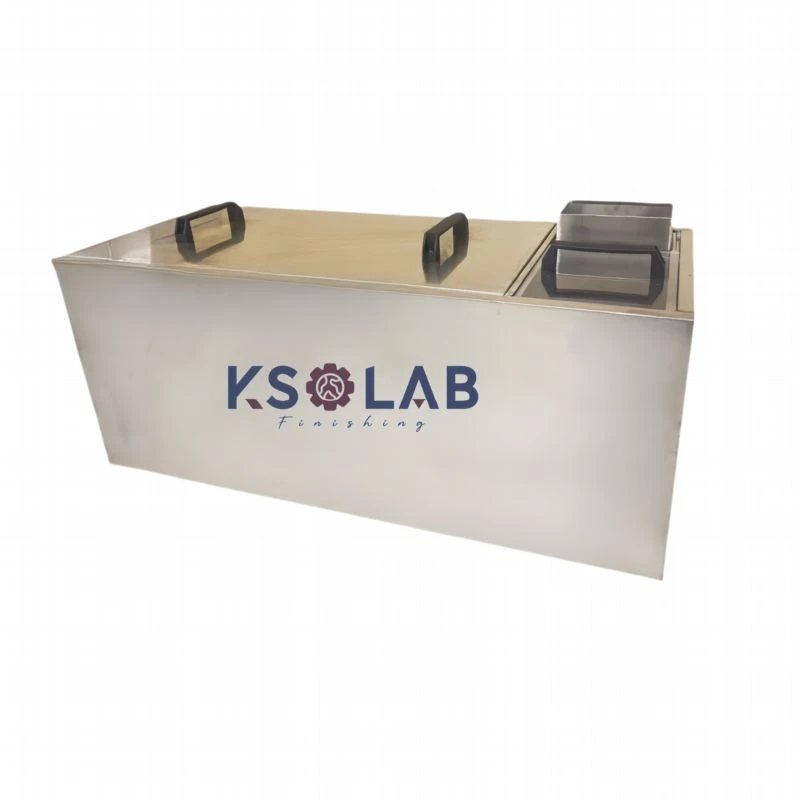
It’s not a one-size-fits-all answer, which is why so many shop owners guess wrong when they first test magnetic polishing. Too many customers come in expecting a 10-minute turnaround for a heavily burned, rough-machined part, only to find out that rushing the process doesn’t just waste time—it can ruin the finish or even damage the component. Over the past 12 years of working with magnetic polishing, I’ve helped hundreds of teams dial in timelines, and today I’m breaking down exactly how long to expect, what factors shift that number, and how to get the most out of your machine.
First, let’s start with the basics: what magnetic polishing actually does, because understanding the process itself is key to grasping the timeline. Unlike traditional methods that use abrasives dragged by hand or forced by vibration, a magnetic polishing machine works by creating a flexible “brush” of magnetic abrasive particles. Those particles are held in place by a rotating magnetic field, which moves them across the surface of your part to cut away burrs, remove oxide layers, and smooth micro-roughness. The interaction between the magnetic particles and the part’s surface is gentle but consistent, which is why it’s so popular for delicate parts, but that same consistency means timelines are tied directly to how aggressively the process can act without causing harm.
So, how long does the average polish take? For most standard, lightly machined parts—think a stamped aluminum medical component that just needs to remove minor tool marks and get to a Ra 0.8 finish (a common industry spec)—you’re looking at 15 to 30 minutes. That’s the sweet spot we see for routine finishing jobs, and it’s fast enough to handle high-volume runs without slowing down production. But if your part is a lot rougher, like a cast steel automotive gear that has deep burrs and a Ra 3.0 or higher right off the mill, you’re going to need more time: 60 to 120 minutes, sometimes even longer. The good news here is that magnetic polishing can handle that heavy work without leaving scratches, which is a big plus over more aggressive tumbling methods that often require separate rough and finish steps.
But here’s where things get interesting: that average 15-to-30-minute timeline only applies if all the variables are aligned. If even one factor is off, that number can swing wildly. Let’s walk through the main variables that determine your total polish time, because knowing these is the difference between guessing at a timeline and planning production like a pro.
First up: part material and initial surface condition. This is the biggest driver of timeline. Soft materials like aluminum, brass, or even plastic take less time to polish because the magnetic abrasive can cut through their surface much faster. I’ve seen a small brass fastener get a smooth, burr-free finish in as little as 8 minutes. On the flip side, hard materials like stainless steel, titanium, or hardened tool steel are way more resistant to the magnetic particles’ cutting action. A titanium dental implant, for example, will take 45 to 60 minutes to get the required Ra 0.4 finish, and if you try to rush that, you’ll end up with uneven polishing on the implant’s complex surface. Initial roughness matters too: if your part has heavy oxidation, deep mill marks, or burrs over 0.1mm thick, you’ll need to add time to the process. Roughness is measured in Ra (average roughness) or Rz (maximum peak-to-valley height), and for every 0.5 Ra increase in initial surface, you can expect to add about 10 to 15 minutes to the polish time. That’s a rule of thumb I’ve tested across thousands of parts, and it’s held up every time.
Next, part geometry and complexity. This is a huge one that most new customers miss. Magnetic polishing particles flow along surfaces, but they don’t penetrate internal corners, blind holes, or complex shapes the same way they do on flat surfaces. A simple cylindrical pin takes 15 minutes to polish, but a small aerospace bracket with 12 blind holes and internal edges can take 90 to 120 minutes. Why? Those hard-to-reach areas require more time for the magnetic brush to work its way into the crevices. If you’re polishing parts with undercuts, threaded holes, or irregular shapes, you’ll also need to account for loading the machine correctly—overloading a part that has complex geometry can prevent the magnetic particles from making contact with every surface, so you might need to do a short test run first to adjust the time. I always advise new customers to run a small test batch of 5 to 10 parts before committing to a full production run. That test run will tell you exactly how long each part needs, and it saves you from wasting hours polishing the same part multiple times to get it right.
Third variable: machine settings and abrasive type. Magnetic polishing machines have adjustable settings—magnetic field strength, rotation speed, and the size of the abrasive particles. If you turn the magnetic field up, the particles press harder against the part, which speeds up the finish, but too high a setting can cause the particles to scratch the surface or even deform thin, delicate parts. For thin-walled components, we usually recommend a lower magnetic strength, which means a slightly longer polish time but no risk of damage. Abrasive type matters too: diamond abrasives are for hard metals like titanium, and they cut faster, so you can polish in less time than with aluminum oxide abrasives, which are better for soft metals like aluminum. Choosing the wrong abrasive will not only extend your timeline—it will give you a poor finish. I had a customer last year who tried to use aluminum oxide on hardened steel parts, and he ended up with a 2-hour polish time when he should have used diamond abrasives and finished in 45 minutes. That’s a classic mistake, and it’s one we help customers avoid with every machine we sell.
Now, what about edge cases? Let’s talk about the extremes that I get asked about all the time. On the fast end: ultra-small parts, like jewelry findings or tiny electronic connectors, that need a burr-free finish. Those can be polished in as little as 5 to 10 minutes. On the slow end: large, heavy parts, like mold inserts or industrial gear housings, that might take 4 to 6 hours to polish, especially if they have complex internal cooling channels or internal edges. For those large parts, we actually use a larger magnetic chamber with higher power magnets, so the timeline is manageable for high-volume production runs.
One thing I always emphasize to customers is that “done” isn’t just about time—it’s about quality. A lot of shops try to cut corners by shortening the polish time, but that leads to inconsistent finishes, leftover burrs, or even parts that fail inspections. I once had a customer who was polishing small stainless steel pins for medical devices; he wanted to finish in 20 minutes instead of 30, so he turned up the magnetic strength. The result? Half the batch had micro-scratches that weren’t visible to the naked eye, but they failed biocompatibility tests. He ended up reworking all 10,000 parts, which cost him twice as much time as the original 10 minutes he tried to save. That’s why I always tell people: the timeline should be based on your required finish and part material, not on how fast you want to get the job done.
So, how do you calculate the exact time for your parts? Let’s use an example to make it concrete. Suppose you have a 10mm diameter, 50mm long 304 stainless steel pin, with an initial surface roughness of Ra 2.0, and you need a final Ra 0.4. Using the rules of thumb I mentioned earlier: hard material (stainless steel) takes about twice as long as soft aluminum. Initial roughness of 2.0 is 1.5 Ra higher than the average lightly machined part (0.5 Ra), so that’s three increments of 0.5, adding 30 to 45 minutes. The part is simple, no complex geometry, so no extra time for hard-to-reach areas. Adjusting for the finish spec—Ra 0.4 is a very smooth finish, so you’ll need to add another 15 to 20 minutes. That adds up to a total of 60 to 85 minutes, which lines up perfectly with the timelines we see for parts like this. If you run a test batch, you can dial that number in to within 5 minutes, so you don’t have to guess.
Now, if you’re reading this and you’re thinking, “Our team is struggling with magnetic polishing timelines, or we’re thinking about upgrading from our old tumbling machine,” that’s where our team comes in. We’ve worked with everything from small job shops that run 100 parts a week to large aerospace manufacturers that run 100,000 parts a month, so we know how to tailor a process to your exact parts and production goals. Whether you’re not sure what abrasive type to use, you’re having trouble with complex geometries, or you just want to get a more accurate timeline for your production runs, we can help. Don’t waste time guessing and risking bad parts—reach out to us to discuss your requirements, and we’ll walk you through how to get the perfect finish in the shortest possible time for your operation.
Vibratory Finishing Machine References:
- Smits, M., et al. (2018). Magnetic abrasive finishing of complex geometries: process parameters and surface quality outcomes. Journal of Manufacturing Processes, 32, 456-465.
- Wang, L., & Zhang, H. (2020). Effect of material hardness on magnetic polishing efficiency for metallic components. Precision Engineering, 65, 112-120.
- ISO 10110-5:2017, Optics and optical instruments – Preparation of drawings for optical elements and systems – Part 5: Surface texture.
- Smith, J. D. (2019). Practical guide to magnetic finishing for industrial applications. Manufacturing Engineering Society International Conference, 12, 789-798.
KS Lab Finishing Co., Ltd.
As one of the most professional magnetic polishing machine manufacturers in China, we also support customized service. We warmly welcome you to wholesale durable magnetic polishing machine made in China here from our factory. If you have any enquiry about pricelist, please feel free to email us.
Address: No.11-14, Yantian Shuibei Commercial Street, Fenggang Town,Dongguan,China
E-mail: sales@kslabfinishing.com
WebSite: https://www.kslabfinishing.net/
