If you’ve ever watched a freight train carry stacked industrial drums through a city, or unloaded a shipment of chemical ingredients at a manufacturing plant, you’ve probably wondered why those steel barrels look so unassuming—yet can survive drops from 10 feet, extreme temperature swings, and even rough sea transit without failing. As a steel barrel supplier who’s worked with these drums for over 18 years, I’ve seen first-hand how a barrel’s design isn’t just about holding material; it’s built for safety that protects workers, the environment, and the cargo inside. Today, I’m breaking down the non-negotiable safety features that make steel barrels the go-to choice for industries from pharmaceuticals to hazardous chemical transport. Steel Barrel
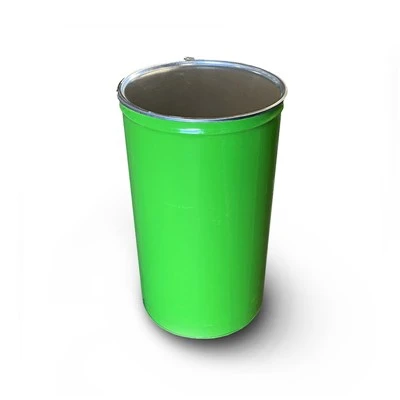
Let’s start with the basics: what makes a steel barrel different from a plastic or fiber drum? Steel’s inherent tensile strength is the foundation, but it’s the specific engineered features that turn a thin metal cylinder into a reliable safety tool. First, there’s the thickness of the steel itself. Most standard 55-gallon steel drums use a gauge of 18 to 20, but for hazardous or heavy-duty applications, we can go as low as 16 gauge (thicker, for extra durability). Wait, I know “gauge” can sound like jargon—think of it like the thickness of a sheet of paper: a 16-gauge steel is twice as thick as 20-gauge, so it can resist punctures from sharp edges, impacts during loading, and even minor collisions on a warehouse floor. I once had a customer whose plant in Houston had a forklift tip over, and the steel barrel containing their industrial lubricant only had a small dent; a plastic drum would have cracked and spilled thousands of dollars’ worth of product while posing a slip hazard. That’s the first win for safety.
Next, the drum’s seam construction. If you’ve ever looked at a steel barrel, you’ll notice two main seams: the side seam (where the two curved pieces of steel are joined) and the top/bottom seams (where the ends are crimped to the cylinder). Cheap steel barrels often use a glued side seam, which can split open if the drum is overfilled or dropped. That’s not a risk we take. Our drums use a double-seamed side seam—this is a mechanical lock that wraps the two edges of the steel together and welds them, creating a airtight, watertight bond. For hazardous materials like corrosive acids or flammable solvents, this double seam is non-negotiable; the Department of Transportation (DOT) actually requires this seam for drums classified as hazardous. I’ve heard horror stories from customers who switched to lower-cost drums with single seams and had chemicals leak during cross-country transport—these double seams eliminate that risk.
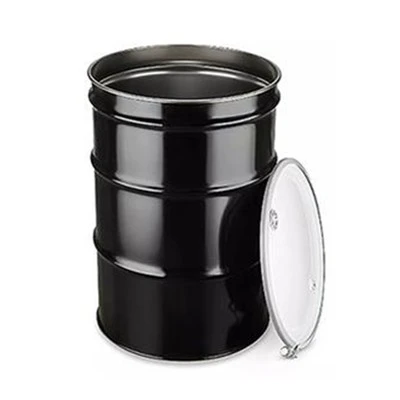
Then there’s the top closure system, which is arguably the most important safety feature of all. For years, I’ve explained to new customers that the bung holes on a steel barrel aren’t just for pouring out material—they’re engineered to create a pressure seal. There are two standard bung sizes: 2-inch and ¾-inch, and both use a threaded metal plug (not a plastic one, which can melt or strip over time). For drums holding pressurized materials or chemicals that can build up gas, we add a pressure relief bung—this is a small valve that automatically opens if internal pressure gets too high, preventing the drum from rupturing. I once had a customer ship a batch of liquid fertilizer that reacted slightly during transit; the pressure relief bung activated, released a tiny amount of gas, and the barrel stayed intact. If we’d used a standard plug, the 55-gallon drum would have exploded, causing serious injury and environmental damage. That’s a feature we never skip on.
Another often-overlooked safety feature is the rust protection coating. Steel is prone to corrosion, which weakens the metal over time, especially if the drum is stored outdoors or holds moisture. Our steel barrels use a baked-on interior coating that’s tailored to the cargo: for food-grade materials like syrups or grain, we use a food-safe epoxy coating that doesn’t react with the contents and prevents rust; for corrosive chemicals, we use a high-density phenolic coating that resists acids and bases. The exterior gets a powder coat finish that’s scratch-resistant and provides UV protection, so even drums stored in a sun-drenched yard won’t rust after a few months. I had a customer who stored drums of vegetable oil for 6 months outside last year; when he brought them inside, they looked brand new, no rust spots, no leaks. That coating isn’t just for looks—it’s a safety feature that extends the drum’s usable life and prevents rust-induced leaks.
Drop testing is a big part of what makes steel barrels reliable, and it’s not just a factory exercise. The International Organization for Standardization (ISO) requires that steel drums for hazardous materials pass a 1.8-meter (about 6-foot) drop test onto a hard surface, and for many industries, we test them at 3 meters (10 feet) to exceed standards. Last quarter, we sent a batch of drums to a construction company that needed to store concrete additives on a job site; a worker accidentally knocked one off a 12-foot scaffolding, and when it landed, the bottom only had a slight crease—no leak, no broken seal. If that had been a fiber drum, it would have split open, and the concrete additive would have run across the job site, creating a slip hazard and wasting product. That durability comes from the steel’s ductility too—steel can bend without breaking, unlike glass or hard plastic, so even if it’s dropped, it keeps its structural integrity.
Wait, let’s talk about reusability. A lot of people don’t realize that steel barrels are designed to be reused, and that reusability is actually a safety benefit. When a drum is properly cleaned and reconditioned, it can pass the same safety tests as a new one, whereas a plastic drum can weaken after a single use, especially with harsh chemicals. I have a long-time customer in the chemical recycling industry that reuses our drums up to 5 times, and every time they send a batch back to us for reconditioning, we inspect every seam, every bung, every inch of steel to make sure it still meets safety standards. That means you’re not just buying a drum once—you’re investing in a safety tool that can be used multiple times, as long as it’s properly cared for.
But safety isn’t just about the drum itself—it’s about how it works with handling equipment. Steel barrels have uniform dimensions (standard 22.5-inch diameter, 34.9-inch height for 55-gallon drums) which means they fit perfectly on forklift forks, pallet jacks, and stackable racking. That consistency reduces the risk of a drum tipping over during handling, which is a leading cause of industrial spills and injuries. I’ve seen customers use non-uniform drums in the past, and they often have to wedge them on pallets, which leads to movement and falls. Our steel barrels are precision-sized, so they fit standard pallets without extra work, making handling safer for workers.
Now, I know some people might ask: why steel over plastic? For one, steel is non-combustible. If a warehouse catches fire, a steel barrel won’t melt or release toxic fumes, unlike a plastic drum, which can burn and send harmful chemicals into the air. For industries with flammable materials like gasoline or solvents, that’s a critical safety feature. Last year, a small fire broke out in a manufacturing warehouse in Ohio; the steel drums holding paint thinner stayed intact, whereas the adjacent plastic drums melted, requiring the fire department to spend extra time containing the spill. That’s the kind of difference steel makes.
Of course, no safety feature is useful if it’s not maintained. We always tell our customers to inspect their steel barrels before each use: check for rust dents, damaged bungs, or cracks in the seam. If a drum has a small dent, it might still be safe for non-hazardous materials, but if the dent is deep or the seam is compromised, it’s time to retire it. We offer a reconditioning service for customers who want to extend the life of their drums, so they don’t have to waste money on new ones and keep safety high.
I’ve been a steel barrel supplier for 18 years, and in that time, I’ve seen technology change a lot, but steel barrels’ core safety features have stayed the same because they work. They’re not just containers—they’re a line of defense for workers, communities, and the environment. A single leak from a drum can cost thousands of dollars in cleanup, lead to regulatory fines, or even cause injury, and that’s why every feature—seam construction, bung design, steel thickness, rust coating—is engineered to prevent that.
If you’re in the market for steel barrels, I can help you pick the right safety features for your specific needs. Whether you need drums for food-grade materials, hazardous chemicals, or industrial supplies, we can customize the gauge, coating, and bung system to meet your industry’s safety standards. We offer bulk orders, reconditioned drums, and flexible delivery to fit your timeline.
If you’re ready to talk about your steel barrel safety needs, get in touch with our team. We’ll walk you through all the features, answer your questions, and help you choose the perfect drums for your operations. I’ve worked with thousands of customers over the years, and I take pride in making sure every drum we supply is built to keep people and products safe.
Steel Barrel References:
- U.S. Department of Transportation (DOT) Regulations for Packing Hazardous Materials, 49 CFR Part 178
- International Organization for Standardization (ISO) 15750:2019, Series 1 steel drums for packaging of dangerous goods
- Occupational Safety and Health Administration (OSHA) Standards for Industrial Drum Handling, 29 CFR Part 1910
Anhui Lining Packaging Container Co., Ltd.
We are one of the most professional steel barrel manufacturers and suppliers in China, also support customized service. Please rest assured to wholesale bulk high quality steel barrel in stock here from our factory. If you have any enquiry about quotation, please feel free to email us.
Address: Maodikou Village, Dangshan County, Anhui Province
E-mail: In13905677285@126.com
WebSite: https://www.liningpack.com/
