If you’re working with automated machinery—think CNC machines, pick-and-place robots, or packaging lines—chances are you’ve got a ball screw linear module at the core of your motion system. And if you’re like most people who reach out to us, you’ve probably wondered: What’s the actual load capacity of these things, and how do I make sure I don’t break one (or waste money on an overbuilt one)? Ball Screw Linear Modules
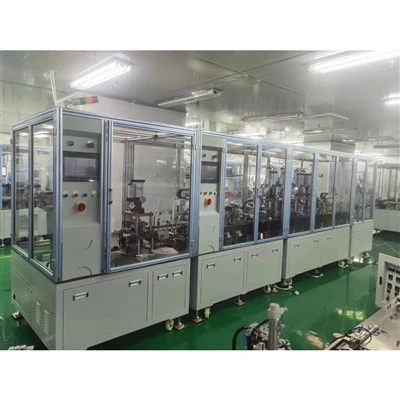
As a supplier who’s been in this game for over a decade, I’ve fielded way too many calls from folks who assumed “load capacity” is just a single number printed on a spec sheet. Newsflash: it’s not. That number’s only half the story—if even that. Let’s break this down like we would over a coffee (no stuffy engineering jargon, promise) so you can stop guessing and start making decisions that actually work for your line.
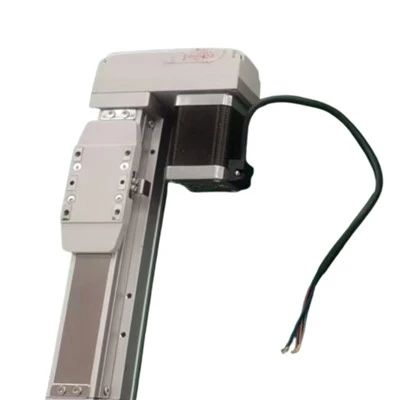
First, let’s get the basics straight: a ball screw linear module is essentially a self-contained unit that combines a ball screw, linear bearings, a housing, and sometimes a motor mount. It moves a payload back and forth, right? The “load capacity” refers to the maximum weight that unit can move reliably without wearing out too fast, or worse, seizing up mid-cycle. But here’s the catch: that number isn’t static. It changes depending on how you’re using the module, not just what you’re moving.
Let’s start with the two main load types you’ll run into: axial load and moment load. Axial load is the straight-up push or pull along the screw’s axis—like if you’re sliding a box of parts along the module’s carriage. Moment load is the twist or bend, like if you’re mounting a heavy tool on the end of the carriage, so its weight is pulling down on one side. Most cheap spec sheets only list axial load, but moment load is where 90% of our customers mess up. Last year, a packaging company reached out because their module was wearing out in 3 months instead of the rated 5 years—turns out they were mounting a 50kg sealing head 10cm off the carriage’s center, creating a huge moment load the spec sheet never mentioned. We swapped in a module rated for moment load, and it’s still going strong.
Next, let’s talk about the factors that change that load capacity number. First, stroke length. If you’re using a module with a 500mm stroke vs a 1000mm stroke, the longer one can handle less load. Why? Because the screw bends under heavy load, and a longer screw bends more. Imagine holding a stick at both ends: if it’s 30cm long, you can push pretty hard in the middle. If it’s 1m long, it bends way easier, so you can’t push as much. That’s exactly how a ball screw works. We had a customer who ordered a 1m stroke module rated for 200kg axial load, tried to move a 180kg payload, and it bent the screw—swapping to a thicker-diameter screw for that stroke fixed it right up.
Then there’s speed and acceleration. If you’re moving that payload slow and steady, you can hit the near-max load. But if you’re doing high-speed cycles—like moving a pick-and-place robot at 1m/s with rapid stops—you’ve got inertia to account for. Inertia is (mass x acceleration), so a 100kg payload accelerating at 2G has twice the effective load of a 100kg payload moving at 0.5G. Most spec sheets use a “standard acceleration” (usually 0.5G) for their load ratings, so if your line’s faster, you need to adjust. We once had a CNC shop that was running their module at 2G—they were blowing through ball screws every 2 months. We calculated their effective load, swapped to a module rated for higher dynamic load, and it cut their maintenance time by 90%.
And don’t forget the environment. If you’re working in a dusty factory, a module with sealed bearings can handle a bit less load than one in a clean room. Dirt gets into the bearings and increases friction, so the screw has to work harder. If you’re working in a temperature-controlled lab, no problem, but if you’re operating in a freezing warehouse, the lubrication changes—so load capacity drops too. We always ask customers about their environment first, not just their payload weight, because that changes everything.
Now, let’s talk about static vs dynamic load, because this is another point of confusion. Static load is the weight the module can hold when it’s not moving—like if you’re lifting a part and holding it in place. Dynamic load is the weight it can move repeatedly, which is what matters for most automated lines. A module might have a static load of 500kg, but a dynamic load of 200kg—because moving it puts more stress on the ball bearings and the screw threads. Last month, a metal stamping plant reached out because their static load-rated module was failing. They were trying to cycle heavy 300kg parts, so the dynamic load was way over the module’s rating. We explained the difference, and they upgraded to a dynamic-rated module that fits their cycle needs.
So how do you actually pick the right load capacity for your application? Let’s break it down into steps, no math degree required:
-
Write down your payload weight, but don’t stop there. Add any extra weight from attachments—tools, grippers, sensors, whatever’s mounted on the carriage. For example, if your part is 30kg and your gripper is 5kg, total payload is 35kg.
-
Calculate your moment load. Measure how far the payload’s center of gravity is from the carriage’s mounting surface. If your tool is 10cm off-center, that creates a twisting force—so you need a module rated for that moment, not just axial.
-
Check your stroke length. If your stroke is longer than 500mm, you’ll need a thicker screw (or a higher load rating) to account for bending.
-
Think about your speed and acceleration. If you’re running cycles faster than 0.5G, add a safety buffer—say, 20-30% more load capacity—to account for inertia. High speed = more stress on the system.
-
Factor in your environment. If it’s dusty, dirty, or extreme temperatures, add another 10-15% buffer, because contaminants and temperature changes increase friction and wear.
Wait, why buffers? Because nothing in automation is perfect. Parts shift, speeds change, or you might scale up your line later. We always tell customers to not push a module to its absolute limit—we’d rather they have a system that runs reliably for 5+ years than one that works for 6 months then breaks down. We’ve seen too many people try to save $100 on a smaller module, only to spend $1,000 on repairs and downtime a few months later.
Now, let’s talk about common myths. I hear these every week:
Myth #1: “Higher diameter = higher load.” Not always. A 20mm diameter screw has a lower max load than a 25mm, but a 25mm with a long stroke has a lower load than a 20mm with a short stroke. Diameter matters, but stroke is just as big.
Myth #2: “I only need axial load, so that’s all I need to worry about.” 80% of motion-related failures are from moment load, not axial. If your carriage is mounted off-center, axial load doesn’t tell you a thing.
Myth #3: “Dynamic load is the same for every cycle.” No—if you’re doing 100 cycles a day vs 10,000 cycles a day, the dynamic load drops. More cycles = more wear, so you need a lower effective load. For high-cycle apps, we recommend choosing a module with a load rating 30-40% higher than your actual need.
So what do we do as suppliers to make this easier? For one, we don’t just send you a spec sheet and say “buy the one with the highest number.” We ask you questions: What’s your payload? What’s your stroke? How fast do you move? How often do you cycle? What environment are you in? We’ve got 10+ years of data on how our modules perform in packaging, CNC, robotics, and more, so we can give you a tailored recommendation instead of a one-size-fits-all.
Last year, a small robotics startup came to us with a custom pick-and-place application. They thought they needed a 150kg axial load module, but after we asked about their moment load and 800mm stroke, we recommended a 100kg axial load module that was rated for the moment they needed. It cost them 20% less, and it’s still working perfectly after 12 months of 24/7 cycles. That’s the kind of win we love—solving problems, not just selling parts.
If you’re still confused about your load capacity, here’s the thing: you don’t have to figure it out alone. Too many folks try to Google answers or guess, and that’s how you end up with a module that’s either too weak (downtime, lost money) or too strong (wasted budget). We’re here to walk through your specific application—no sales pitch, just honest advice. Whether you’re prototyping a new line, replacing a broken module, or scaling up, we can help you pick a ball screw linear module that’s the right fit for your load, your cycle, and your budget. Don’t wait until your line goes down to fix it—reach out, and let’s talk through it.
Slide Table and Linear Module references
- Linear Motion Systems Association. (2022). Ball Screw Linear Module Load Capacity Best Practices.
- Motion Control Handbook. (2021). Dynamic vs Static Load Ratings for Linear Motion Components.
- Industrial Automation Journal. (2023). Common Causes of Ball Screw Linear Module Failure in High-Speed Applications.
- SKF Motion Technologies. (2020). Load Calculation for Ball Screw Systems in Custom Automation Applications.
Yangning (Xiamen) Intelligent Technology Co., Ltd.
With abundant experience, we are one of the most professional ball screw linear modules manufacturers in China. As we have world-leading production equipment and strong manufacturing capabilities, we warmly welcome you to buy bulk advanced ball screw linear modules from our factory. Customized orders are welcome.
Address: Room 307-2, No. 15 Duiying Road, Software Park Phase III, Torch Hi-Tech Zone, Xiamen, Fujian, China
E-mail: mia@ynautos.com
WebSite: https://www.ynautos.com/
