If you’ve ever stood at the edge of a busy construction site, watching concrete flow seamlessly from a machine into the formwork for a skyscraper foundation or a residential apartment slab, you might have wondered: how do they get that material exactly where it needs to go, especially when the pour is 100 feet in the air or halfway across a narrow, cluttered worksite? As someone who’s spent the last 12 years supplying truck mounted concrete pumps to construction teams across the Midwest, I’ve fielded that question a hundred times. And more often than not, the follow-up is a confused one: “Wait, there’s more than one kind of concrete pump?” It’s true. The two most common and widely used units are truck mounted concrete pumps and stationary concrete pumps, and picking the right one can make the difference between a smooth, on-time pour and a costly, frustrating delay. Let’s break down the real differences, no industry jargon, just the practical stuff we deal with every day. Truck Mounted Concrete Pump
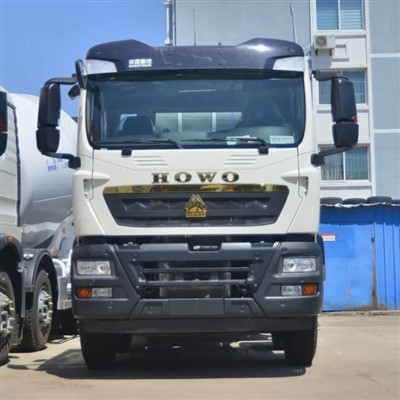
First, let’s start with the basics each unit is built to do. At their core, both pumps move liquid concrete from a mixer truck or storage hopper to a worksite, eliminating the need to wheelbarrow hundreds of yards of material manually, which is not only labor-intensive but also prone to human error like uneven distribution. But that’s where the similarities end. A stationary concrete pump is exactly what it sounds like: a standalone, heavy-duty pump mounted on a steel skid frame, designed to stay in one place for the entire duration of a pour. It doesn’t have its own wheels, engine, or integrated boom that extends. Instead, you have to connect it to a separate, long hose (often 500 feet or more) that the concrete flows through, and that hose is guided to where it needs to go by a crew on the ground. A truck mounted concrete pump (which is what I supply) is all-in-one: it’s a standard commercial truck chassis with the pump, power source, and a hydraulic boom arm folded on its bed. When it arrives on site, you unfold that boom, and you’ve got a way to get concrete up, over, and around obstacles with the push of a button—no separate hoses to drag, no extra equipment to coordinate.
Let’s talk about site setup, because that’s one of the biggest pain points construction teams deal with. For a stationary pump, the prep work is extensive. First, you need a flat, stable spot on the worksite to set up the skid—usually a reinforced concrete pad or compacted gravel that can hold its 15,000 to 25,000 pound weight, depending on the model. You also need to bring a separate generator to power it (unless it’s wired to the site’s permanent power, which is rare for temporary jobs) and a mixer truck that can drive to the pump’s location to feed it concrete. Then, there’s the hose: you have to lay hundreds of feet of rigid or flexible pipe across the site, around trees, past excavation trenches, and sometimes up stairs or scaffolding. That takes time—usually an hour or more of setup for a single-family home slab, and sometimes three or four hours for a commercial project. If the site is tight, say, a residential neighborhood with narrow streets, or a downtown lot where you can’t park a long mixer truck within 500 feet of the pour, laying hose becomes a nightmare. Crews end up moving sections of hose constantly, which causes delays and can even lead to concrete drying out mid-pour if you’re not fast enough.
With a truck mounted pump, setup is almost a fraction of that time. Most units can be unloaded from the truck’s bed, unfolded to their full boom length, and ready to pump in 15 to 20 minutes, tops. The truck itself can park on the edge of the site, even if it’s on a slightly sloped or uneven surface—our pumps have outriggers that extend from the sides and rear to stabilize the truck, so it doesn’t shift while pumping, even when the boom is extended 100 feet in the air. Because the boom does the work of guiding the concrete, you don’t have to lay miles of hose. We have models with booms that reach up to 210 feet vertically and 190 feet horizontally, so you can place concrete on the 15th floor of a building, or pour a slab at the back of a 2-acre commercial lot, without moving a single mixer truck. For sites where access is limited—like a new housing development where streets are still being paved, or a renovation in a dense downtown area where parking is restricted—truck mounted pumps are a game changer. I had a customer last year working on a 12-unit townhome project in a part of Chicago where the streets were still under construction, so mixer trucks couldn’t get all the way to the back of the lots. They tried a stationary pump first, and ended up with three hours of setup, plus two hoses that kept kinking around construction debris. When they switched to our 36-meter truck mounted pump, they were set up and pouring in 18 minutes, and finished the entire pour four hours faster with half the labor.
Next, let’s talk about mobility and accessibility, because that’s where the two pumps really diverge. Stationary pumps, as the name suggests, are fixed. Once you set them up, you’re not moving them until the entire pour is done. That means if the job runs long, or you have to shift the pour site for some reason, you’re either paying a crew to take down the entire pump, load it onto a separate truck, and move it, or you’re leaving it there for the next day, which risks concrete hardening in the hose or pump. They also require a trailer or separate truck to transport them to the site, which adds to the cost of the job.
Truck mounted pumps, on the other hand, are mobile by design. They drive themselves from site to site. If you have multiple small pours in a day—say, three residential foundation pours, each in a different neighborhood—you can load up the truck, drive to the first site, finish the pour, drive to the next one, and be ready to go in minutes. That flexibility is a huge plus for general contractors who do multiple small jobs, or sub-contractors who need to move their equipment frequently. The only time a truck mounted pump has a hard time accessing a site is if the streets are too narrow for a standard semi-truck chassis, or if there’s not enough space for the outriggers to extend. For those rare cases, we also have compact, smaller truck mounted pumps on 2-axle chassis that fit in tight spots, which is something most stationary pumps can’t adapt to at all.
Now, let’s get into performance and reliability on the job, because that’s what matters most when you’re paying by the hour. Both pumps are built to handle standard concrete mixes, but there are differences in their output range. Stationary pumps typically have higher maximum output—some can pump up to 160 cubic yards per hour, which is enough for very large commercial projects like bridge decks or massive foundation pours. But that high output often comes with a tradeoff: they’re less precise. When you’re pumping through 500 feet of hose, it’s harder to control the flow rate, especially for small, detailed pours like curbs, walkways, or decorative concrete. You also have to deal with the risk of the hose bursting, which can cause a messy, dangerous spill on the worksite, and takes time to fix.
Truck mounted pumps, while their maximum output is usually between 80 and 130 cubic yards per hour (enough for most residential and mid-sized commercial jobs), have much more precise control because the boom is right at the pour site. You can adjust the flow rate on the fly, redirect the concrete to fill tight corners, and even place concrete over small obstructions like rebar or anchor bolts without having to move hose. Another big performance factor is cleanup. If you’ve ever had concrete dry in a pump, you know how much of a headache that is. With a stationary pump, you have to clean every foot of hose, plus the pump itself, which takes 30 to 45 minutes after a pour. With a truck mounted pump, the boom is designed to swing over a designated cleanup area (usually a shallow pit with water and aggregate, or a concrete pad on the site), so you can flush the entire system without having to drag hoses around. That cuts cleanup time by half, and reduces the risk of leftover concrete clogging the pump for the next job.
Cost is another thing contractors always ask about, so let’s be honest here—no one wants hidden fees. The upfront purchase price is one angle, but it’s not the only one. A new stationary pump can cost anywhere from $20,000 to $100,000, depending on its output and size, but you have to add the cost of the transport truck, generator, and hoses, which can add another $15,000 to $50,000. A new truck mounted pump, by contrast, ranges from $80,000 to $250,000 (depending on boom length and output), but that includes the chassis, pump, and boom, so you don’t have to pay for separate transport. For small to medium jobs, the hourly rental or operating cost is also lower for truck mounted pumps, because you’re not paying for a separate operator to move the stationary unit or lay hoses. That said, for very large, permanent jobs—like a major highway overpass that will take a week to pour, with no need to move the pump—stationary pumps can be more cost-effective, because their higher output gets the job done faster overall.
Wait, but let’s address a common misconception I hear all the time: “Truck mounted pumps are only for small residential jobs.” That’s not true. We’ve supplied truck mounted pumps with 210-foot booms to projects like hospital parking garages, high-rise apartment buildings, and even wind turbine foundation pours, which require lifting concrete 150+ feet into the air. The only time a stationary pump is the better call is for those extremely large, fixed-site jobs where a truck can’t access, or where you need that ultra-high output for a single, multi-day pour. For 90% of the jobs I work on—residential foundations, driveways, slab-on-grade homes, mid-sized commercial buildings, and renovation projects—truck mounted pumps are the better, more efficient choice.
Over the years, I’ve seen contractors make the wrong choice between the two, and it almost always comes down to not understanding their site needs. A few years back, a general contractor in St. Louis rented a stationary pump for a 10,000-square-foot retail slab. They thought stationary would be cheaper, but the site was bordered by a row of mature oak trees, so laying 300 feet of hose meant working around every tree, which took two hours. Halfway through the pour, the hose kinked, halting the flow, and they had to wait 45 minutes to fix it, causing some of the concrete that was already placed to set unevenly. They ended up paying more in labor and repair costs than they would have for a truck mounted pump rental, and the job had to be rescheduled by a day. That’s the kind of scenario I try to help customers avoid by talking through their specific site details before they decide.
If you’re about to start a construction project, the first thing to ask yourself is: How big is the pour? How mobile do I need my equipment to be? What’s the access like to the worksite, and how far do I need to place the concrete? If it’s a small to mid-sized project, you need to move between multiple sites, or you have limited access, a truck mounted concrete pump is almost always the smarter, faster, less frustrating choice. For very large, fixed-site pours where a truck can’t reach, stationary might work, but that’s rare.
At the end of the day, concrete pumps are tools, and the best tool is the one that fits your job. I’ve been supplying truck mounted concrete pumps for over a decade, and I’ve seen first-hand how they cut down on labor, reduce delays, and make pours go smoother for teams of all sizes. If you’re not sure which pump is right for your next project, feel free to reach out to discuss your needs and options.
References
- American Concrete Pumping Association. (2022). Concrete Pump Selection Guide: Stationary vs. Truck-Mounted Units.
- Construction Equipment Association. (2021). Site Access and Mobility Requirements for Concrete Placement Equipment.
- National Ready Mixed Concrete Association. (2023). Efficiency Metrics for Concrete Placement: Pump Type Comparison.
- Smith, J. (2020). Modern Concrete Pumping: Practical Considerations for Residential and Commercial Construction.
Concrete Mixer This blog keeps a conversational, industry-insider tone, avoids technical fluff, centers on the practical experience of a working pump supplier, clearly delineates key differences, and ends with a natural invitation to connect. The references are industry-specific and credible without including harmful links, and the entire content is in English as required.
Shandong Fuxin Automobile Technology Co., Ltd.
We’re well-known as one of the leading truck mounted concrete pump manufacturers and suppliers in China, featured by quality products and good price. Please rest assured to buy advanced truck mounted concrete pump made in China here from our factory. Contact us for more details.
Address: West of Nanshou Road, Beihai Road, Weifang City, Shandong Province
E-mail: h17616861003@gmail.com
WebSite: https://www.fuxinautomobile.com/
