If you’ve ever walked through a HVAC manufacturing plant, or even a small workshop that makes heat exchangers for industrial machinery, you know how critical fin quality is. Those thin, folded metal fins stack up to transfer heat efficiently, and a small flaw in their surface finish can derail an entire heat exchanger’s performance, not to mention cut into production time. As a fin press machine supplier, I get asked this question more than any other: “What is the fin surface finish quality I can actually get from a modern fin press, and how do I make sure mine is up to snuff?” Today, I’m breaking this down not with technical jargon that sounds like it was pulled from a textbook, but with the kind of real-world insight I’ve gathered over 18 years working with shops that build everything from residential AC units to large-scale industrial cooling systems. Fin Press Machine
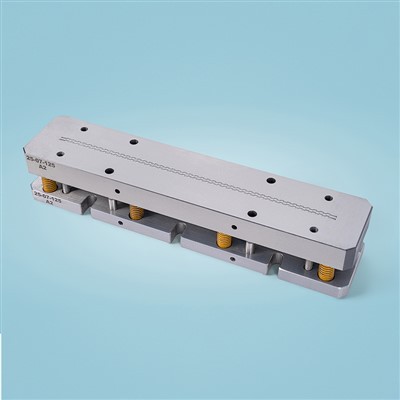
Let’s start with the basics: what “fin surface finish quality” actually means in this context. It’s not about shiny, polished metal for show. It’s about the texture, flatness, absence of scratches, burrs, and micro-defects on the fins after they’re formed by the press. For a fin to work properly, it has to nest tightly with other fins in the stack, sit flat against the tube that runs through them, and not have any rough edges that could catch on downstream processing equipment or harm installers. Poor surface finish doesn’t just cause fit issues—it disrupts airflow through the heat exchanger, creates hot spots that reduce energy efficiency, and even leads to premature corrosion if tiny burrs scratch away the protective coating on the metal.
The first thing to understand is that fin press surface quality isn’t a one-size-fits-all number. It depends on three core factors: the press’s design, the tooling you use, and the control parameters you set. I’ve seen shops buy a cheap, used fin press for a fraction of the cost of a new model, only to end up with fins that have so many burrs they have to hand-deburr every single one—wasting hours of labor that eats into their profit margin. On the flip side, I’ve worked with shops that use premium presses and still get subpar fins because they cut corners on tooling maintenance, letting a small nick in the die ruin hundreds of thousands of parts.
Let’s dive into the real specs you should care about, not the marketing fluff. Most modern servo-driven fin press machines deliver a surface roughness (Ra) value of 0.8 to 1.6 micrometers for standard aluminum or copper fins—the two most common materials for heat exchanger fins. Wait, let me make that relatable: 1.6 Ra is roughly as smooth as the side of a new aluminum soda can. A lot of budget presses top out at 3.2 Ra, which means the surface has visible, rough grooves that you can feel if you run your finger over it. For most applications, 0.8 to 1.6 Ra is the sweet spot: it’s smooth enough to prevent burrs, tight in fits, and doesn’t require secondary deburring, but it’s not so polished that you’re wasting time on over-processing.
But surface roughness is only part of the story. Flatness and burr height matter just as much. A fin that’s flat within 0.02 millimeters over its entire length will nest perfectly with other fins, creating uniform airflow. If a fin is even slightly warped, it can create gaps between fins that reduce heat transfer by 5 to 10 percent—something that’s a big deal for residential AC units, where efficiency directly affects SEER ratings. As for burr height, the industry standard for acceptable burrs on fin press-formed parts is less than 0.05 millimeters. That’s thinner than a human hair. I’ve seen budget presses produce fins with burrs as tall as 0.2 millimeters—enough to catch on a tube as you’re inserting it, bend the fin, and scrap a whole batch.
Now, let’s talk about how a fin press machine actually delivers that quality, because this is where many suppliers overpromise and underdeliver. Servo-driven presses are non-negotiable for consistent fin quality. Older hydraulic presses rely on pressure to form parts, which can lead to inconsistent force across the die—one side of the fin might be pressed harder than the other, causing uneven surface texture and burrs. Servo motors let you program exact stroke speeds, force levels, and cycle positions, so every fin is formed the same way, thousands of times in a row. I remember a shop that switched from a hydraulic press to our servo model two years ago; their burr rate dropped from 12 percent to less than 0.5 percent, and they cut their fin processing time by 30 percent because they no longer had to deburr.
Tooling is the unsung hero here, too. A fin press’s dies—those custom-shaped parts that actually form the fin—have to be made from high-grade tool steel, precision-ground to within 0.005 millimeters of the desired shape. Cheap dies will wear out after a few hundred thousand cycles, developing tiny nicks that leave scratches and burrs on fins. We supply our presses with dies that are coated with a durable, low-friction material like TiN (Titanium Nitride) or DLC (Diamond-Like Carbon) which reduces friction between the die and the metal strip, preventing scratches and extending die life by up to 50 percent. A customer of ours in Mexico was using uncoated dies on their competitor’s press and changing them every 200,000 cycles; with our coated dies, they go 500,000 cycles before needing a replacement, saving them thousands in tooling costs every year.
Control systems also play a big role in surface finish quality. Modern fin presses have touchscreen interfaces that let you adjust parameters like feed speed, pressure, and stroke in real time, and many have built-in quality sensors that catch fins with defects before they leave the press. I’ve had customers tell me they used to rely on their operators to spot bad fins, which meant a lot of defective parts slipping through. Our presses come with in-line vision inspection systems that can spot a scratch, burr, or warped fin in 0.2 seconds, automatically rejecting it so it doesn’t make it to the next step. That not only improves surface quality but also reduces waste—another big win for shops that are working on tight margins.
But here’s the thing: even the best fin press in the world won’t deliver consistent quality if you don’t maintain it properly. I’ve had a customer in the U.S. who bought one of our top-of-the-line presses, then skipped regular maintenance for six months because they were busy meeting a big order. When they called us saying their fins suddenly had bad burrs, we found that the die clearance had shifted because the press’s linear guides weren’t lubricated, and a small amount of metal dust had built up in the feed mechanism. We fixed it in a day, but it was a reminder that quality is a partnership between the machine and the operator. Basic things like cleaning the die, checking clearance, and calibrating the control system every month go a long way in keeping surface finish quality consistent.
Now, let’s get to the practical side: what does this mean for your operation? If you’re making small residential AC units, you don’t need a $500,000 industrial press—our mid-range servo press delivers 1.0 Ra surface finish, burrs under 0.04 mm, and flatness within 0.02 mm, which is perfect for that application. If you’re making large industrial heat exchangers for power plants or refrigeration systems, you’ll want our high-output model, which can run 120 fins per minute and delivers 0.8 Ra finish, with even tighter flatness control for large-format fins. The worst mistake I see shops make is overbuying or underbuying: paying for a press with features you don’t need, or skimping on a press that will cause you more headaches in the long run.
I also want to address a common myth: some people think that thinner fins require a better surface finish. That’s mostly true, but not for the reason you think. A 0.1 mm thick aluminum fin is more flexible than a 0.3 mm fin, so it’s easier to damage during forming. But a modern fin press with proper servo control and precision tooling can form even 0.08 mm thick fins (used in high-efficiency HVAC systems) with the same low Ra and burr height as thicker fins. I’ve seen shops struggle with thin fins because they were using a old press with inconsistent force, leading to bent fins and surface scratches—something that goes away when they switch to a servo-driven model.
Let’s talk about real-world results, not just specs. A customer of ours in Texas makes heat exchangers for commercial refrigeration units. Before they switched to our fin press three years ago, their fin surface finish had an average Ra of 2.2 micrometers, with a burr rate of 8 percent. They were spending $12,000 a year on deburring labor alone. After installing our press, their average Ra dropped to 1.1 micrometers, burr rate fell to 0.3 percent, and they eliminated all manual deburring. They told us that their customer satisfaction went up too, because the heat exchangers they produced had 7 percent better energy efficiency due to the uniform fin spacing and smooth surfaces. That’s the kind of real impact that surface finish quality makes—beyond just parts on a table, it affects your bottom line and your reputation.
Now, I know what you’re thinking: this all sounds great, but how do I verify that a fin press will actually deliver that surface quality before I buy it? The good news is that we offer on-site trials for all our fin press models. We can bring a portable version of our press to your facility, run sample fins using your materials and specifications, and let you test the surface finish, flatness, and burr rate yourself. We also provide detailed reports from our in-house quality lab, where we measure Ra using a profilometer, check flatness with a laser micrometer, and count burr height under a microscope. There’s no guesswork here—you get to see exactly what you’re getting before you make a purchase.
At the end of the day, fin surface finish quality is the difference between good parts and great parts. It’s the difference between meeting your efficiency targets and missing them, between having a low defect rate and wasting thousands of dollars on scrapped parts. As a fin press machine supplier, I don’t sell presses— I sell reliability, lower labor costs, and better products for your customers. If you’re tired of dealing with fin presses that deliver inconsistent surface quality, require constant deburring, and eat into your profits, I’d encourage you to reach out to us to talk about your specific needs. Whether you’re a small shop just starting out or a large facility scaling up production, we can help you find a fin press that delivers the surface finish quality you need, at a price that works for your budget.
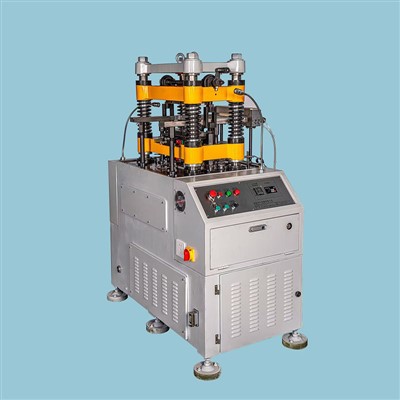
Don’t let subpar fin surface finish hold your operation back. The right fin press isn’t just a piece of equipment—it’s an investment in higher quality, lower costs, and long-term growth. Let’s connect to discuss how we can tailor a solution for your heat exchanger production needs.
Servo Cutting Machine References
- ASME B106.1M-1985, Surface Texture (Surface Roughness, Waviness, and Lay)
- Heat Transfer Research, Inc. (HTRI), Fin Surface Finish Impact on Heat Exchanger Performance, 2021
- Society of Manufacturing Engineers (SME), Fin Press Technology and Surface Quality Standards, 2022
- Aluminum Association, Guidelines for Fin Manufacturing and Surface Quality, 2020
Suichang Lvye Machinery Co., Ltd.
We are one of the most professional fin press machine manufacturers in China, also support customized service with low price. We warmly welcome you to buy discount fin press machine for sale here from our factory. If you have any enquiry about quotation, please feel free to email us.
Address: No. 402, Mudanting East Road, Miaogao Street, Suichang County, Lishui City, Zhejiang Province
E-mail: L528753@outlook.com
WebSite: https://www.suichanglvye.com/
