Lightning strikes on suspension insulators are one of the most critical and misunderstood events in high-voltage power transmission. For anyone who’s ever driven past a stretch of transmission lines on a stormy day, it’s easy to take those tall metal towers and the strings of glass or ceramic discs strung between them for granted. But those insulators aren’t just passive pieces of equipment—they’re the first line of defense between a live power line and the metal tower that supports it, and when lightning hits, their performance can make the difference between a grid that stays online and a blackout that disrupts homes, hospitals, and businesses for hours or even days. Suspension Insulator
Let me start with a quick story to put this in perspective. Last year, I got a call from a utility manager in the Midwest who’d dealt with three separate lightning strikes on his 345kV transmission line in a single month. Each strike had blown out a string of insulators, forcing crews to climb 100-foot towers in the middle of rainy weather to replace damaged units, costing his team an estimated $150,000 in downtime and labor. When we inspected the failed insulators, we found something interesting: two of them had suffered from what’s called “puncture failure,” where the lightning’s arc burned through the insulator’s core, and one had a surface flashover, where the arc traveled along the outside. That’s the kind of detail that makes suspension insulator suppliers like me wake up at 2 a.m.—because it’s not just about selling a product; it’s about making sure those insulators do their job when a storm rolls through.
First, let’s break down what a suspension insulator actually is, because you can’t understand a lightning strike on one without knowing the basics. A suspension insulator is a type of high-voltage insulator designed to suspend transmission lines from towers, lines, or poles. Unlike pin insulators that sit on top of poles, suspension insulators are hung vertically (or at an angle) from a cross arm on the tower, with the power line attached to the bottom end. Most modern suspension insulators are either porcelain, glass, or composite (polymer), made up of individual units strung together in a “string” to handle the high voltage of transmission lines—think of each disc as a small barrier that prevents electricity from leaking from the live line to the grounded tower.
Now, a lightning strike on a suspension insulator isn’t the same as a lightning strike on a tree or a roof. Lightning is a massive discharge of electricity, usually negative (cloud to ground), with currents ranging from 10,000 amps to over 200,000 amps. When it hits a transmission line, two things can happen: either the lightning attaches directly to the insulator string, or it strikes the line nearby and induces a surge of voltage that travels down the line to the insulator. Either way, the insulator has to withstand that surge without failing.
Here’s where the science gets specific. The insulator’s job is to have a higher dielectric strength than the air around it, so that the voltage surge travels through the air (a flashover) instead of through the insulator itself. But if the surge is too strong, or the insulator is damaged (cracks, dirt, or aging that reduces its dielectric strength), the arc will break through. There are two main types of failure during a lightning strike: flashover and puncture. Surface flashover is when the arc travels along the outer surface of the insulator, between the line end and the tower end. Puncture failure is when the arc penetrates the interior of the insulator, destroying its insulating properties permanently. That’s why, for us as suppliers, we test every insulator to withstand thousands of volts of surge—because even a single lightning strike can test that limit.
I’ve seen a lot of myths about lightning strikes on insulators over the years. One of the biggest is that all insulators are the same, so a cheaper one will do. But from our team’s experience, a composite insulator (which we specialize in, by the way) has a different response to lightning than porcelain or glass. Composite insulators have a polymer outer sheath, which is hydrophobic—it repels water, so even in rain or fog, the surface doesn’t get wet enough to conduct electricity easily. That’s a big advantage in areas with high humidity or frequent storms, where porcelain insulators can get covered in a conductive layer of salt or dirt (called “contamination”) that lowers their surface resistance, making flashover more likely.
Another myth is that lightning strikes are rare, so utilities don’t need to invest in better insulators. But data from the International Council on Large Electric Systems (CIGRE) shows that lightning accounts for 50-70% of all transmission line outages in North America and Europe. That’s not a small number—every other outage on a high-voltage line is caused by lightning, and the insulator is usually the weak link. Last quarter, we worked with a utility in Southeast Asia that had 12 outages in a six-month period, all tied to lightning strikes on insulators that had been installed 10 years earlier. The insulators had developed tiny cracks from UV exposure, which acted as pathways for the arc during a strike. That’s why we emphasize regular inspection and replacement, not just initial installation.
Let’s talk about what happens in the split second when lightning hits an insulator. When the voltage surge arrives, the electric field around the insulator becomes extremely strong. If the field is strong enough to ionize the air between the line end of the insulator and the tower end, a spark forms—this is the start of a flashover. If the flashover is successful, the arc jumps through the air, bypassing the insulator, so the power keeps flowing, and the insulator is unharmed. But if the insulator’s surface is damaged, or the surge is too big, the arc will instead break through the insulator’s material. For porcelain insulators, this often causes the discs to shatter; for composite insulators, the sheath can burn through, exposing the fiberglass core underneath, which then conducts electricity.
What we’ve learned as suppliers is that the design of the insulator string matters a lot, too. The length of the string (measured in “insulation distance,” the total surface path along the discs) directly affects its ability to withstand lightning surges. A 115kV line needs a string of around 10-12 suspension insulator units, while a 500kV line needs 25 or more. If a utility cuts corners and uses a shorter string, the insulator is far more likely to suffer flashover during a lightning strike. That’s where our engineering team comes in—we work with utilities to calculate the exact required string length based on their local lightning activity, line voltage, and environmental conditions.
I remember one job we did a few years ago for a wind farm in the Great Plains. The wind farm’s transmission lines were exposed to frequent, intense lightning storms because the Plains have some of the highest lightning density in the U.S. The utility was using standard porcelain insulators, which were failing at a rate of 1 insulator per 10 strikes. We recommended a composite insulator string with an extended creepage distance (that’s the total surface path along the insulator, designed to resist contamination) and a core made of high-strength fiberglass. After installation, the failure rate dropped to 1 insulator per 100 strikes. That’s the kind of impact we’re here to make—turning a common, costly problem into a manageable one.
Another key point: lightning strikes can also cause long-term damage that doesn’t show up right away. A small flashover might only leave a tiny scorch mark on the insulator’s surface, which seems harmless, but over time, the heat from the arc can weaken the material, making it more susceptible to damage from future strikes or even heavy rain. That’s why proactive maintenance is better than reactive replacement—if you inspect insulators after every storm, you can catch these minor scorch marks before they turn into full failure.
Now, I should be clear: we’re not just selling insulators. We’re part of a network that keeps the grid running. When a lightning strike hits a transmission line, the last thing a utility manager wants is to deal with a broken insulator in the middle of the night. Our team keeps a stock of insulators in warehouses across the U.S. and Canada, so we can ship replacements within 24 hours of a storm, no matter where the outage is. That’s a big part of what sets us apart—we know that reliability isn’t just about the product, it’s about supporting our customers when they need it most.
If you’re a utility manager, a grid engineer, or someone who works in power transmission, you probably know how stressful lightning season can be. The good news is that understanding how suspension insulators respond to lightning strikes is the first step to preventing outages. A few key takeaways: choose the right insulator material (composite is often best for storm-prone areas), make sure your string length is matched to your voltage and lightning activity, and inspect regularly to catch early damage.
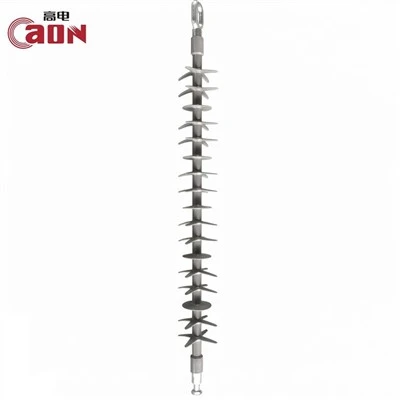
At the end of the day, a suspension insulator might look like a simple disc of glass or polymer, but it’s a complex piece of equipment engineered to handle some of the most powerful natural events on Earth. When lightning strikes, it’s not just a test of the insulator—it’s a test of the people who design, install, and maintain it. That’s why we take this work seriously. If you’re looking for insulators that are built to withstand lightning, or you need help designing a string solution for your line, I’d invite you to reach out to our team to discuss your needs. We don’t do one-size-fits-all solutions; every transmission line, every storm, every challenge is unique, and we’re here to work with you to find the right fit.
Line Post Insulator References
- International Council on Large Electric Systems (CIGRE). Lightning Performance of Transmission Lines, 2020.
- IEEE Standard for Insulators for Overhead Transmission Lines, IEEE Std 40-2012, 2012.
- Composite Insulators for High Voltage Applications, Electric Power Research Institute (EPRI), 2019.
- Transmission Line Outage Statistics: North American Electric Reliability Corporation (NERC), 2022.
Gaodian Technology Co., Ltd.
Gaodian Technology Co., Ltd. is one of the most experienced suspension insulator manufacturers and suppliers in China. We warmly welcome you to buy customized suspension insulator made in China here from our factory. If you have any enquiry about cooperation, please feel free to email us.
Address: No.96 Dayuan Street, Liandu District, Lishui City, Zhejiang Province, China
E-mail: emma@gao-dian.com
WebSite: https://www.gao-dian.com/
