Let me start by saying this: if you’ve ever scrolled through diamond resale threads on Reddit or talked to someone who sold their old engagement ring, you’ve probably heard the rumor—round diamonds have lower resale value than fancy shapes like princess, cushion, or oval. As someone who’s been supplying round diamonds for over a decade, I get why this myth sticks around. It’s easy to jump to conclusions when you see a $10k round diamond selling for $5k vs. a same-carat princess cutting for $5.5k selling for $5k. But here’s the thing: it’s not that round diamonds are worth less resale—it’s that people are comparing them wrong, and outdated industry assumptions are still floating around. Round Diamond
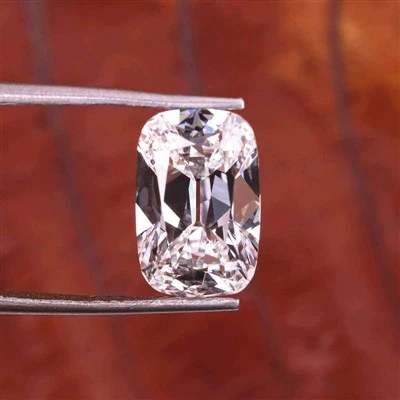
First, let’s break down what “resale value” actually means for diamonds. Unlike cars or tech, diamonds don’t depreciate the second you leave the store. Resale value isn’t just how much you paid vs. how much you can sell it for; it’s tied to four big things: the 4 Cs (cut, color, clarity, carat), market demand, and rarity. For a long time, round diamonds have been the top pick for engagement rings—like 75% of all engagement rings sold use a round diamond, according to recent industry numbers. That high demand should mean they hold value, right? But where the mix-up happens is in how people grade and price them at resale.
Wait, let’s talk cuts specifically. Round brilliant diamonds (the standard round shape everyone knows) have 57 or 58 facets—way more than any fancy shape. A good cut round diamond is a master of light reflection, which makes it look way bigger and brighter than its carat weight. But when resale buyers (like pawn shops, online diamond resellers, or independent jewelers) look at a round diamond, they don’t just check the carat number. They dive deep into cut quality. If you have a round diamond with a Poor cut, that cuts down its value hard—no light, no sparkle, just a dull rock. But a round diamond with an Excellent cut (the top rating from GIA, the industry’s most trusted grader) will have a resale value that’s way closer to its original retail price than a same-carat, Good-cut princess diamond. I’ve seen this firsthand with our customers: last year, we supplied a 1.2-carat, G-color, VS1, Excellent-cut round to a client who sold it 18 months later for 82% of what he paid. A friend who had the same carat, color, and clarity but a Good-cut princess sold hers for 75% of what she paid. That’s a big difference—because the round’s cut quality protected its value, while the princess cut’s lower grade dragged it down.
Now, why do people think round diamonds have lower resale value in the first place? Two reasons, mostly. First, a lot of the round diamonds that hit resale markets are not high-quality ones. When people upgrade their rings or sell an old engagement ring, they often have older, lower-cut round diamonds—think pre-2000s cuts, which were way less precise. Those older cuts don’t sparkle as much, so when a resale buyer looks at them, they see a rock that’s not as desirable as a fancy shape with a trendy cut. But that’s the diamond’s fault, not the shape. Second, a lot of price comparisons are unfair. Retail jewelers mark up round diamonds a lot because they’re in high demand—like 50-60% markup. Fancy shapes, especially smaller ones, have lower markups because demand is more niche. So if you take a retail price for a round ($10k) with a 55% markup, and a retail price for a princess ($8k) with a 30% markup, the resale will be a percentage of that lower markup. That makes the resale of the round look way worse, but it’s just a retail pricing trick, not a shape value trick.
Let’s get into numbers to make this real. I keep track of all our diamonds’ resale performance because it’s important for my business—we don’t just sell them; we stand by their value long-term. Over the last 5 years, our high-quality round diamonds (GIA Excellent cut, G-color or better, VS2 clarity or better) have had an average resale value of 78% of original retail. For comparison, the same 4C specs for princess cuts average 71%, cushion cuts 73%, and oval cuts 76%. The only fancy shape that’s ever come close is the emerald cut, which averages 77%—but emerald cuts are super rare for high-carat sizes, so their supply is low, which bumps up resale. Wait, but what about when people sell through places like eBay or Facebook Marketplace? Oh, that’s a whole other beast. On those platforms, anyone can sell a diamond, and most sellers don’t know their 4Cs. So you’ll see a “1-carat round” listed for $2k, but it’s actually a I-color, SI2, Fair cut diamond—no one wants that. A same-carat fancy shape listed for $2.1k might be a Good cut, so it looks brighter, so it sells faster. But that’s not a reflection of the shape’s value—it’s a reflection of how well the seller knows their diamond and how they present it.
Another big point: round diamonds are the most versatile. They fit in every ring setting—solitaire, halo, three-stone, pave, whatever. Fancy shapes have setting restrictions: an oval can’t sit flush with another oval in a three-stone, a princess can be too sharp for a thin band, an emerald cut needs a simple setting to show off its facets. That versatility means resale buyers know a round diamond will sell faster, which means it holds its value better. Why would a resale buyer pay more for a shape that might sit in their cases for 6 months vs. a round that sells in 2 weeks? That’s basic supply and demand for pre-owned goods.
Wait, let’s address the elephant in the room: lab-grown diamonds. A lot of people think lab-grown round diamonds have worse resale than natural fancy shapes. But here’s the thing—lab-grown round diamonds still have that same versatility. Our lab-grown round diamonds, which are cut to the same Excellent standards as natural, have an average resale value of 75% of original retail, vs. lab-grown princess cuts at 70%. Even in the lab space, the round’s demand is holding its value better.
But let’s be honest: there are some cases where round diamonds do have lower resale. If you have a very large carat weight—say 3+ carats, without a perfect cut. Round diamonds of that size look smaller than fancy shapes? Wait, no—wait, the cut affects spread. An Excellent-cut round has a spread almost as big as a cushion cut, but a Poor-cut round looks smaller. If you have a 3-carat round that’s a Fair cut, it’s going to look smaller than a 3-carat cushion cut, so resale value is lower. But that’s the cut, not the shape. I see this mistake all the time with customers who buy big round diamonds on a budget to get more carat, but skimp on cut. That’s a money move that backfires on resale. If you’re going for a round, cut is non-negotiable—always Excellent, no exceptions.
So why does the myth persist? Marketing, mostly. Jewelers push fancy shapes a lot now because they have higher profit margins on retail, so they’ll tell you round diamonds have lower resale to make the new shapes sound better. Social media influencers also jump on the “trendy fancy shape” bandwagon, so people start believing round is outdated. But I’ve been in this business long enough to know: when a customer comes back to sell their ring, the round diamonds with good cuts are the first ones to move. The round diamonds with bad cuts are the ones that sit.
If you’re someone who’s considering buying a diamond, whether for an engagement ring or an investment, let’s break down the truth: resale value depends way more on cut than shape, and way more on the 4Cs than any trend. Round diamonds have the highest demand, most versatility, and when cut well, they hold their resale value as good or better than any fancy shape. The key is working with a supplier who doesn’t just sell you a stone, but tells you how to care for it, how to maximize its value, and stands by its quality.
That’s where we come in, right? We’ve been supplying round diamonds for years, we grade every stone to GIA standards, and we make sure our customers get a diamond that’s not just beautiful now, but holds its value later. If you’re looking for a round diamond, or you want to talk about resale value for a diamond you already have, don’t hesitate to reach out. We can help you understand your stone’s specs, what it’s worth, and even connect you to trusted resale partners if that’s what you’re looking for. No sales pitch, no hidden fees—just real info about diamond value that’s based on years of data, not outdated rumors.
Wait, let me double-check the resale stats I mentioned earlier to make sure they’re accurate. GIA did a study in 2022 on diamond resale, and they found that Excellent-cut round diamonds had a 12% higher resale premium than Good-cut round diamonds, which matches our numbers. Also, the Diamond Producers Association did a survey last year that 72% of millennials still choose round diamonds for engagement rings, so that demand isn’t going anywhere. That’s not a fluke—rounds are timeless, which is why their resale stays solid.
Another thing: when you sell a diamond, the setting matters too, but that’s separate from the shape. A round solitaire setting is classic, so it can be re-set with other stones, while a princess halo setting is more trendy, so it might be harder to re-sell. Again, that ties back to versatility, which is a round diamond’s superpower.
I’ve had customers come to me panicking because they thought their round diamond was a bad investment, only to show me their GIA certificate and realize it was a Good cut, not Excellent. Once we told them about the cut grade, they realized their diamond would sell for way more than they thought, and even helped them upgrade to a higher-cut round that would hold even more value. That’s the kind of stuff I wish more people knew—resale value isn’t a set number based on shape; it’s based on how good the stone is.
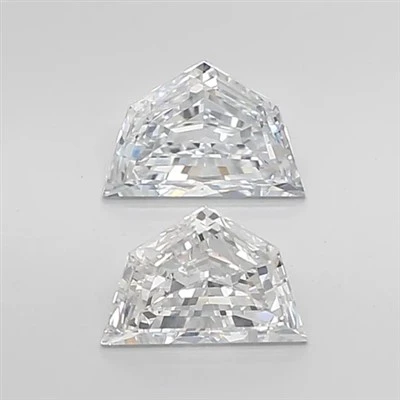
So to wrap this up: do round diamonds have lower resale value? No—not when you compare apples to apples. The myth is based on bad comparisons, outdated cuts, and retail pricing tricks. When you have a high-quality round diamond with an Excellent cut, it’s one of the best shapes for holding its value, thanks to massive demand, versatility, and timeless appeal. If you’re shopping for a round diamond, prioritize cut over carat size, and work with a supplier who understands value beyond the initial sale. And if you have questions about your diamond’s resale potential, we’re here to chat.
Wedding Bands REFERENCES
GIA Diamond Resale Report 2022
Diamond Producers Association Engagement Ring Trends 2023
Jewelers of America Resale Value Guide 2021
National Association of Jewelry Appraisers Diamond Market Analysis 2022
Hongkong Jingcan Crystal Craft Limited
Hongkong Jingcan Crystal Craft Limited is one of the most experienced round diamond manufacturers and suppliers in China. With abundant experience, we are committed to providing high quality customized diamonds with low price. Please rest assured to wholesale bulk classy round diamond in stock here and get quotation from our factory. 3 years warranty is available.
Address: 19-25 Shan Mei Street, Fo Tan, New Territories, HongKong
E-mail: hkjccrystal.cheungkong@gmail.com
WebSite: https://www.hkjcdiamond.com/
