If you’re in the market for a two-way radio to stay connected on job sites, outdoor adventures, or events, chances are you’ve seen 5 watt walkie talkies mentioned as a go-to option. As a supplier of these radios, I get this question all the time: “What is the real range of a 5 watt walkie talkie, and how does it apply to what I need?” The answer isn’t a one-size-fits-all number, but breaking down the science and real-world factors behind it helps you choose the right radio for your needs. Unlike the “up to 50 miles” claims you might see on cheap, unlicensed radio listings, 5 watt radios have a practical range that depends on far more than just power. 5 Watt Walkie Talkie
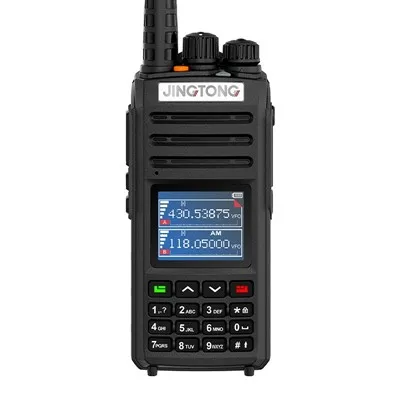
First, let’s start with the basics: wattage is a measure of the power a radio transmits. A 5 watt radio is more powerful than the 1 or 2 watt units many people use for casual park or camping trips, but power alone doesn’t dictate range. The Federal Communications Commission (FCC) limits most consumer two-way radios to 5 watts for the General Mobile Radio Service (GMRS), a popular licensed band in the U.S., and the Family Radio Service (FRS) caps unlicensed units at 2 watts. That means 5 watt radios are a step up for users who need more reach, but their real-world range is shaped by three core categories: environment, antenna design, and radio setup.
Environment is the biggest variable for range. Radio signals travel in straight lines, a concept called line-of-sight, but they bounce off, absorb, or weaken when they hit physical objects. In open areas like a flat desert, a high hilltop, or a wide, empty parking lot, a 5 watt radio can reach up to 10 miles between units if both antennas are at least 6 feet off the ground. Without obstacles blocking the signal, the 5 watt power lets that signal travel farther than a lower-wattage radio. But put those same two radios in a downtown city, with skyscrapers, concrete walls, and steel girders, and that range drops drastically—often to 1 to 2 miles. Obstacles don’t just block signals; they cause multipath interference, where a signal bounces off a building and arrives at the receiver at the wrong time, making it garbled or unreadable. Add trees, hills, or even heavy rain or snow, and range drops even more. In a dense forest, for example, leaves and bark absorb UHF (Ultra High Frequency) signals, which most 5 watt radios use, so range might be as little as a half-mile.
Antenna design is the second key factor. A 5 watt radio’s antenna is what sends and receives its signal, and a cheap, short rubber duck antenna won’t perform nearly as well as a longer, gain-optimized antenna. Most standard rubber duck antennas for 5 watt radios are 3 to 6 inches long, designed for portability, but a 12 to 18 inch external antenna for fixed vehicles or base stations can boost range by 2 to 3 times. Why? Antenna length is matched to the frequency the radio uses—for UHF, the ideal antenna is a quarter wavelength, which is around 12 inches for 450 MHz, the most common GMRS frequency. A rubber duck antenna often cuts that length short, so it’s less efficient at converting the radio’s 5 watts into a signal that travels far. That’s why a 5 watt radio with a good external antenna can outperform a 10 watt radio with a bad rubber duck antenna in the same environment. At my company, we test every batch of 5 watt radios with different antenna options, because we know that even a 5 watt unit’s range is only as good as its antenna.
Third, radio setup and user habits make a big difference. Even with a perfect antenna and open environment, if you hold the radio at your side while walking, your body will absorb up to 50% of the signal. That’s why most professional users hold the radio away from their body, near shoulder height, for best performance. For fixed setups, mounting a 5 watt radio in a vehicle with a roof-mounted antenna (15 to 20 inches) boosts range because the antenna is higher, avoiding ground-level obstacles. Repeaters are another game-changer: a GMRS repeater receives a signal and retransmits it on the same frequency, extending range by adding a high, powerful base station. A 5 watt radio using a repeater can reach 20 to 30 miles in open areas, because the repeater’s signal is transmitted from a 100+ foot tower. Many of my customers use repeaters for their construction crews or farm operations, turning a 5 watt radio into a long-range communication tool.
Now, let’s get specific about common use cases, because that’s where most people need to apply this. For small businesses like landscaping teams, retail store security, or event staff, a 5 watt walkie talkie is ideal. A landscaping crew spread over 10 acres of a suburban neighborhood can expect 2 to 3 miles of range, enough to communicate between lawnmowing sites and the office. Construction crews, who work in a mix of open lots and partial concrete structures, often get 1 to 2 miles of range, which is enough to coordinate work across multiple buildings or staging areas. For outdoor enthusiasts, like hunters, hikers, or campers, 5 watt radios shine in backcountry with few obstacles—many users report 5 to 8 miles of range between mountain peaks, enough to stay connected while exploring separate trails.
A common misconception: unlicensed FRS radios, even if they say “5 watts” on the box, often don’t meet FCC standards. Many cheap FRS units run on a fraction of that power, or their range claims are inflated. That’s why licensed GMRS 5 watt radios are more reliable for professional or serious recreational use. As a supplier, we only offer GMRS-approved 5 watt radios, because they’re tested to meet FCC regulations, so you don’t get stuck with a radio that overpromises and underdelivers. Another note: the 5 watt power limit applies to the transmitter, but receivers matter too. A radio with a sensitive receiver can pick up weaker signals, so even if two radios both put out 5 watts, the one with a better receiver will have longer range.
What about range tests I’ve heard from customers? Last year, a customer who runs a 20-cow dairy farm told me he tested our 5 watt radios between his farmhouse and his distant pasture, which was 4.5 miles away. The radios worked perfectly, no dropouts, because the area between them was open pasture with only a few trees. Another customer, a roofing company, uses our 5 watt radios for crews working on skyscrapers in downtown Chicago. Their range is around 1.5 miles, enough to communicate between ground-level management and crews on the top floors, even with steel beams and concrete walls blocking the signal. Those real-world tests are way more accurate than the “50 mile” claims you see online.
So, how do you maximize the range of your 5 watt walkie talkie? First, invest in a good antenna—swap the rubber duck for a gain antenna if you’re using the radio for outdoor or professional use. Second, keep the antenna as high as possible: mount it on your vehicle roof, or hold the radio at shoulder height, not at your hip. Third, use a repeater if you need to extend range beyond what line-of-sight offers. And finally, match your radio frequency to your environment: UHF frequencies work better indoors and in dense areas, while VHF (Very High Frequency) works better outdoors over long distances. Most 5 watt radios are dual-band, so you can choose the right band for your needs.
At the end of the day, the range of a 5 watt walkie talkie is a practical number, not a marketing gimmick. It’s not a fixed distance, but a capability that adapts to your surroundings and setup. For users who need reliable communication without the complexity of cell phones or expensive satellite systems, a 5 watt radio is a great investment—you just have to understand what it can and can’t do.
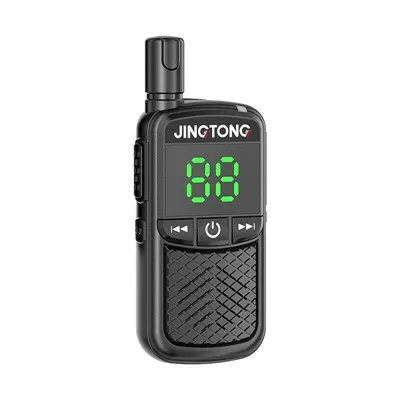
If you’re looking for a 5 watt walkie talkie that’s tested, reliable, and tailored to your specific needs, our team can help you find the right model for your job, hobby, or event. Whether you’re managing a construction crew, exploring backcountry trails, or coordinating a large gathering, we can walk you through range, setup, and features to make sure you get the most out of your two-way radios. Reach out to our team to discuss your requirements and get a customized quote for bulk orders or individual units.
Marine Radio References
- Federal Communications Commission. (2022). Rules for Two-Way Radio Services: GMRS and FRS.
- National Association of Broadcasters. (2021). Radio Propagation for Two-Way Communications.
- Two-Way Radio Manufacturers Association. (2023). Practical Range Guidelines for Consumer and Professional Two-Way Radios.
Jingtong (Quanzhou) Electronics Co., Ltd.
We are one of the most professional 5 watt walkie talkie manufacturers and suppliers in China, specialized in providing high quality customized service. We warmly welcome you to buy durable 5 watt walkie talkie made in China here from our factory. For price consultation, contact us.
Address: No.288, Si Huang Industry Zone, Xia Mei Town, Nan An, Quanzhou, Fujian province, China 362302
E-mail: jtdjj@jtdjj.com
WebSite: https://www.jteradio.com/
