Hey everyone, if you’ve ever driven past a power substation and wondered how the grid stays safe and reliable, you’ve probably glanced at those big, metal switch-like structures towering over the equipment. As a high voltage disconnector supplier, I get asked all the time: “What’s a single break high voltage disconnector, and why does it even matter?” Let’s break this down straight—no jargon that’ll make your head spin, just the real deal on how these work and why they’re non-negotiable for power systems. High Voltage Disconnector
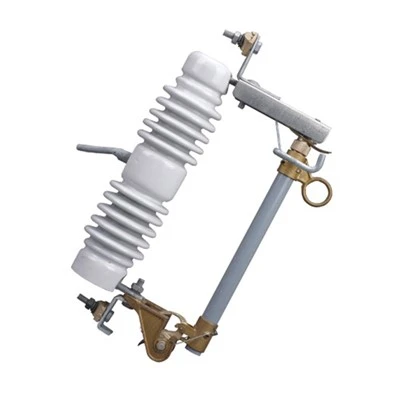
First off, let’s start with the basics to set the scene. High voltage stuff isn’t your household outlet, right? We’re talking 11kV all the way up to 800kV or more—levels where even a tiny misstep can cause sparks, fires, or full blackouts. Disconnectors (sometimes called isolators, but we stick to disconnectors in the industry) aren’t like the breakers in your basement. Breakers cut live current when there’s a fault, but disconnectors? Their whole job is to create a visible, physical break in the power line when the circuit’s already dead. That’s critical for maintenance—if a tech needs to work on a transformer or a transmission line, they can flip the disconnector to cut the section off from live power, so they don’t get shocked.
Now, the “single break” part. Let’s visualize a disconnector. Most disconnectors are made of three core parts: two terminals connected to the power line, a conductive arm that swings between them, and insulators that hold the whole thing up (keep it from arcing to the ground). A single break disconnector means there’s only one gap between the arm and the opposite terminal when it’s open. That gap is the insulator, basically, separating the live line from the dead side. Wait, why single break over multiple? Let’s get into that in a sec, but first, let’s clear up what a “break” actually does here. When it’s closed, the arm touches both terminals, so current flows through. When it’s open, that gap is enough to stop current—until we close it again.
Let’s talk about where single break disconnectors get used, because that’s where you’ll see them day in and day out. You’ll find them in transmission substations (those big ones that move power across long distances), distribution substations (the smaller ones that drop voltage for neighborhoods), and even some renewable energy setups—like solar farms or wind farms, where you need to isolate individual arrays for repairs. Why single break vs. double break, another common type? Let’s be real, cost plays a role first. A single break disconnector is simpler to design and build. It has fewer moving parts, less material, so it’s cheaper upfront. For medium high voltage (say 11kV to 132kV), that gap is wide enough (we size it based on voltage, obviously) to handle the current and prevent arcing under normal dead-circuit conditions.
Wait, arcing is a big deal here, even if the circuit’s supposed to be dead. Sometimes, there’s residual current—static, or a small charge left in the line—that can cause a tiny arc if the gap isn’t right. Single break disconnectors are engineered with that gap sized just right, based on the voltage class. For example, a 33kV single break disconnector has a gap of around 150mm, while a 220kV one is way wider, like 1.5 meters. That gap is critical—it’s not just a random space, it’s calculated to withstand the electrical stress from the voltage so no arc jumps across when it’s open.
Now, let’s bust a common myth: people mix up disconnectors and circuit breakers. A lot of new folks in the industry ask, “If there’s a fault, why not just use a disconnector?” The answer is: disconnectors can’t handle live current switching. If you try to open a disconnector while power’s flowing, that single gap will arc really hard—like, weld the arm to the terminal hard. That’s why disconnectors always have to be used after a breaker has already killed the current. That’s the safety protocol: open breaker first, then disconnector, to create that visible break. Close it when the breaker’s back on, of course.
What are the pros of single break disconnectors, specifically, as someone who sells them? Let’s list the practical stuff. First, lower maintenance. Fewer moving parts mean less to fix. If a double break has two gaps, that’s two places that can wear out, get dirty, or develop corrosion. Single break’s got one—easier to inspect, easier to lubricate, less downtime for upkeep. Then, compact design. For substations that are tight on space, a single break disconnector takes up less room than a double break. That’s a huge plus for urban areas, where land’s expensive and substations can’t spread out.
Wait, but when would you not use a single break? For super high voltage, like 500kV and up, sometimes a double break is better. Because at those voltages, the gap for a single break would be enormous—like 3 meters or more. That’s hard to mount, hard to insulate, can be dangerous if a bird or a tree branch gets too close. Double break splits the gap into two, each smaller, so each only has to handle half the voltage stress. But for most of the high voltage work we do—11kV to 245kV, which is the most common range for substation stuff—single break is perfect. It’s reliable, it’s cost-effective, it does exactly what it’s supposed to do.
Let’s talk about how they work in real operation. When a substation needs to do maintenance on a feeder line, the control room operator will first trip the circuit breaker that feeds that line. That cuts all live current. Then, they operate the single break disconnector’s mechanism—usually a motor for big ones, or a manual lever for smaller units. The conductive arm swings away from the terminal, creating that single gap. Techs will come in, lock out the disconnector to make sure no one flips it while they’re working, then get to work. Once the repairs are done, they unlock it, close the disconnector first (since there’s no live current, no arc), then flip the breaker back on. It’s a routine, but essential, process that keeps thousands of people getting power every day.
Now, as a supplier, I can tell you that the best single break disconnectors aren’t just metal parts. They’re built with specific materials that hold up to the elements. Outdoor disconnectors have porcelain or composite insulators—composite is lighter, more resistant to dirt and ice, which is great for places with harsh weather. Indoor ones might have epoxy insulators, since they’re in controlled environments. The conductive arms are usually aluminum or copper—light, strong, and good at carrying current without losing too much energy.
Wait, common issues with single break disconnectors? Let’s be transparent, no sales fluff here. Over time, dirt, dust, and salt (if you’re near the coast) can build up on the gap, reducing its insulating ability. That’s why regular inspections are key. Also, the operating mechanism can wear out—if the lever or motor gets stuck, the disconnector might not open or close all the way, which defeats the whole purpose of the gap. That’s why we build our disconnectors with simple, durable mechanisms that are easy to service. We also do routine testing before shipping—dielectric tests to make sure the gap can handle the voltage, mechanical tests to make sure the arm swings smoothly, even after thousands of operations.
Another thing: single break disconnectors are versatile. They come in different configurations—horizontal break, vertical break, pantograph style. Horizontal is the most common, where the arm swings sideways. Vertical is good for substations where overhead space is limited. Pantograph style is compact, great for small distribution boxes. No matter the configuration, the core is always that one gap between two contacts, making it a single break.
Let’s circle back to why this matters beyond just substation tech. Every time you turn on your lights, charge your phone, or run your fridge, that power has to go through a disconnector at some point. If a disconnector fails, maintenance takes way longer, or there’s a safety hazard that could shut down power for hundreds of homes. That’s why choosing the right disconnector—like a reliable single break one—isn’t just a equipment choice, it’s a community thing.
Wait, I should mention that there’s a difference between indoor and outdoor single break disconnectors too. Indoor ones are smaller, enclosed, so they don’t have to deal with rain, snow, or UV rays. Outdoor ones are built to withstand extreme temps, high winds, even ice loading. For example, if you’re in a place like Minnesota, where it can get 20 below zero in winter, the disconnector’s operating mechanism has to work in that cold, no matter how much ice builds up on the insulator. Our disconnectors are rated for that kind of stuff—we test them in environmental chambers before they leave our warehouse.
Now, if you’re a utility manager, a substation designer, or someone who’s just learning about high voltage gear, you’re probably wondering: when should I go with a single break vs. another type? Like I said, if your voltage is under 245kV, you’re working with limited space, and you want to keep costs reasonable, single break is the way to go. It’s been around for decades, proven reliable, and there’s a ton of experience installing and maintaining them. The only time you’d step up to double break is if you’re dealing with 500kV and above, or if your substation has super tight clearance requirements that make a single break’s gap too big.
As a supplier, I work with a lot of small utilities and big transmission companies alike. For a small distribution substation serving a couple towns, a 33kV single break disconnector is perfect—affordable, easy to install, hard to mess up. For a big transmission substation moving power across the country, a 220kV single break disconnector is ideal, since it’s got a wide enough gap to handle the voltage without taking up too much space.
Let’s wrap this up. So to recap: a single break high voltage disconnector is a key piece of electrical gear that creates one visible, insulating gap in a power line when the circuit is de-energized. It’s simpler, cheaper, and more compact than multiple break types, perfect for most medium high voltage applications. It’s not a breaker—it can’t switch live current, but when used correctly, it’s the main safety tool for isolating sections of the grid for maintenance.
If you’re in the market for a reliable single break high voltage disconnector, or you’ve got questions about sizing, installation, or maintenance, we’re here to help. We’ve been building and supplying these for years, so we know the ins and outs. Feel free to reach out to discuss your specific needs, and we can walk you through the best options for your substation or project.
Instrument Transformer References
- IEEE Standard for High-Voltage Disconnectors and Earthing Switches (IEEE C37.100-2018)
- Electrical Transmission and Distribution Reference Book, Westinghouse Electric Corporation
- High-Voltage Switchgear Design and Application, by K. R. Gupta
- National Electrical Safety Code (NESC) 2023, Section 12 (Substation Equipment)
Zhongtai Electric Power Technology Co., Ltd.
With abundant experience, we are one of the most professional high voltage disconnector manufacturers and suppliers in China. We warmly welcome you to wholesale bulk customized high voltage disconnector from our factory. If you have any enquiry about quotation, please feel free to email us.
Address: High-tech Industrial Park, Chongren County, Fuzhou City, Jiangxi Province (No. 261 Yingbin Avenue)
E-mail: info@zhongtaielectric.com
WebSite: https://www.zhongtaipower.com/
