If you’ve ever wondered why Japanese plugs look different from what you might see in other parts of the world, you’re not alone. I’m a supplier of Japanese Standard Plug Pins, and every day, I get questions from clients, electricians, and even small business owners about how these little metal bits actually work. Let me break it down in plain terms—no confusing jargon, just the real scoop on what makes Japanese plug pins tick. Jp Standard Plug Pin
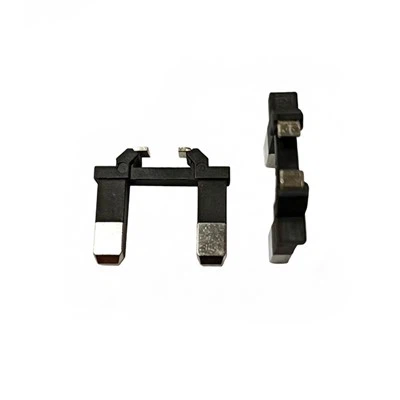
First off, let’s get clear on what a Japanese Standard Plug Pin even is. In Japan, the official standard for plugs and sockets is set by the Japanese Industrial Standards (JIS), right? The common two-prong type you’ll find on most home devices (think phone chargers, laptops, small kitchen appliances) uses two flat metal pins. Wait, but there’s a difference between a random pin and one that meets the JIS standard, and that’s where my work comes in. A lot of people don’t realize that these pins aren’t just pieces of metal bent into shape—they’re engineered to fit perfectly, conduct electricity safely, and last through years of plugging and unplugging.
Let’s start with the basics of how electricity flows through a plug pin. When you plug a device into a socket, the socket has two slots that the pins slide into. The electricity from your home’s wiring travels through the socket’s internal contacts, then through the plug’s pins, into the device’s power cord, and eventually to the circuitry inside. If the pins are too loose, you get a bad connection, which can cause arcing—little sparks that can damage the plug or even start a fire. If they’re too tight, you’ll struggle to plug them in, and over time, that can wear out both the pins and the socket. JIS standards take all that into account, so as a supplier, my job is to make sure every pin meets those exact specs.
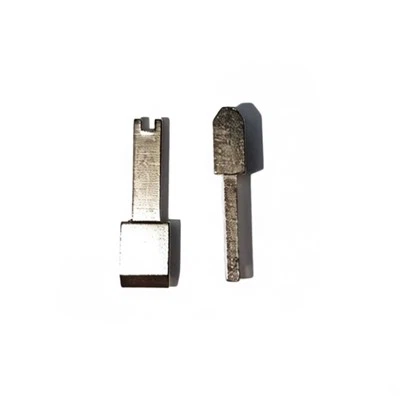
Now, what are the pins made of? You might think it’s just copper, but pure copper is soft and would bend easily after a few uses. So we use a copper alloy—usually with a mix of tin or nickel—to add strength. Some of the higher-quality pins we supply even have a thin layer of gold plating for devices that need a super reliable connection, like medical equipment or precision electronics. Wait, gold sounds fancy, but it’s actually practical: it resists corrosion way better than plain copper, so even if the plug sits unused for months, the pins won’t tarnish and stop conducting power. That’s a big deal for people who use equipment in humid places, like bathrooms or industrial spaces.
Next, the design details that make Japanese plug pins work as they should. JIS specifies the exact dimensions: the pins are 1.7mm thick, 7mm wide, and around 18mm long, right? But it’s not just the size—there’s also the “tang” or the part that bends slightly inside the plug housing. That bend is what creates tension, so the pins press firmly against the socket’s contacts without being too stiff. If the bend is too sharp, the pin might snap when you insert it. If it’s too gentle, it won’t stay in contact, leading to poor performance. We test every batch of pins to make sure that tension is just right—usually by simulating thousands of plugging and unplugging cycles, and checking that the tension stays consistent.
Another thing people don’t talk about much is insulation and grounding. Wait, the common two-prong Japanese plug doesn’t have a ground pin, but that’s by design for low-voltage devices. The JIS standard covers that too—so the plastic housing around the pins is made from a heat-resistant material, like Bakelite or a high-grade plastic, that won’t melt even if there’s a minor overload. As a supplier, we make sure the pins are fully enclosed except for the part that inserts into the socket, so there’s no chance of someone touching a live metal part by accident. That’s a safety thing, not just a convenience—Japan has strict fire and electrical safety rules, and our pins have to meet all of that.
Let me also explain how wireless charging ties into this, because a lot of people ask me about that now. Wait, the question mentioned “wireless Jp Standard Plug Pins”—so it’s not just the wired pins, right? A lot of modern devices use wireless charging, but the foundation is still those Japanese standard pins. Here’s the connection: wireless charging for devices that originally use Japanese plugs still relies on the same electrical safety specs. Even if you’re not plugging in a cable, the wireless charger needs to draw power from the wall, and that power comes from a plug that meets JIS standards. So the pins in the plug that connects the charger to the socket have to work the same way—conducting power reliably, resisting corrosion, and fitting securely. We’ve actually been supplying pins for wireless charger manufacturers too, because they need the same quality as wired plugs.
Wait, let’s get real for a second. I’ve seen a lot of cheap knockoff pins online—they’re the same size, but they’re made of thin metal, bend after a week, or have uneven plating. Those don’t work well, and they’re dangerous. As a supplier, I tell clients to always check that their pins have the JIS mark, because that means they’ve been tested to work properly. For example, if you’re a small business making phone chargers, using subpar pins might save you a few cents upfront, but if one of your chargers causes a fire because the pin burned out, that’s a huge problem. We make sure every pin we supply passes conductivity tests, corrosion tests, and mechanical strength tests.
How does the manufacturing process work to make these pins? It’s not as simple as stamping a piece of metal. First, we start with the copper alloy rod, which is cut to the right length. Then, we form the shape of the pin, including that bend for tension. Next, we plate it—usually tin plating for most applications, gold for specialty ones. After that, we trim the excess material and inspect each pin under a microscope to check for defects: no burrs (sharp edges that can cut the socket), no uneven plating, no bent pins. We also test the conductivity—if a pin doesn’t pass the electrical resistance check, it’s scrap. That’s why our clients come back to us: we don’t cut corners on the testing.
Let me answer a common question I get: why do some Japanese plugs have slightly different pin spacing? Oh, right—JIS has a few different standards. The most common is the 7mm pin spacing for home plugs, but there’s also a 4mm spacing for older devices. We supply both, so we can work with different clients, from people restoring vintage appliances to manufacturers making new devices. The key is that no matter the spacing, the pins have to meet the JIS specs for material, tension, and safety.
Another thing: the impact of environmental factors. Japan has a pretty humid climate, especially in summer, so corrosion is a bigger issue than in drier places. The plating on our pins is designed to resist that humidity, so even in a hot, damp room, the pins won’t tarnish. We also test pins in climate chambers that mimic extreme conditions—high temperature, high humidity—to make sure they still work after weeks of that. That’s a big selling point for clients who sell products in Southeast Asia, where the climate is similar to Japan’s.
Wait, let’s make this relatable. Think about when you plug in your laptop at home: the pin slides into the socket, there’s a small click, and you know it’s secure. That click is the tension from the pin’s bend, working as it should. If the pin was made poorly, there’d be no click, and you might have to wiggle the plug to get power. Over time, that wiggling damages both the plug and the socket, and eventually, you might not get power at all. Our pins are made so that click is consistent every time, so you don’t have to worry about that.
Now, since I’m a supplier, I want to make this clear for anyone looking to buy Japanese Standard Plug Pins. Whether you’re a manufacturer making home appliances, a repair shop replacing pins, or an importer bringing devices into your country, the right pins make all the difference. We offer custom options too—if you need a specific length, plating, or tension, we can work with you to make that happen. We don’t just sell standard pins; we partner with clients to make sure their products are safe, reliable, and meet all the necessary standards.
I know a lot of people search online for “how do Japanese plug pins work” and don’t get answers that are easy to understand. They either get too technical or are just sales pitches. I wanted to break it down like it is: these pins are small, but they’re critical. They have to conduct electricity, stay strong, resist corrosion, and fit perfectly into the socket. All of that is based on JIS standards, and as a supplier, that’s what we focus on every day.
If you’re looking for high-quality Japanese Standard Plug Pins, whether for a one-time order or bulk supply, feel free to reach out. We can talk about your specific needs, answer any questions you have, and make sure you get the right product for your project. Don’t settle for cheap, untested pins—they might seem like a deal, but they’re not worth the risk. We stand behind every pin we supply, and we’re here to help you get the parts that work, safely and reliably.
Uk Standard Plug Pin References:
- Japanese Industrial Standards Committee. (2018). JIS C 8303: Plugs and Socket-outlets for Household and Similar Purposes.
- Copper Development Association. (2020). Copper Alloys for Electrical Connectors and Pins.
- International Electrotechnical Commission. (2021). IEC 60884: Plugs and Socket-outlets for Household and Similar Purposes.
Dongguan Fangrun Metal Products Co., Ltd.
We’re well-known as one of the leading jp standard plug pin manufacturers in China, specialized in providing high quality customized products. Please feel free to buy discount jp standard plug pin made in China here from our factory. For quotation and free sample, contact us now.
Address: New Town Industrial Zone,Xiegang Village,Xie Gang Town,Dongguan City
E-mail: 825556703@qq.com
WebSite: https://www.fangrunpin.com/
