Hey everyone, let’s cut to the chase. If you’re in manufacturing, materials science, or even just testing random stuff for quality control, you’ve probably used or at least heard of a Universal Materials Tester (UMT) — right? As a UMT supplier, I get why they’re the go-to for so many teams: one machine that can do tension, compression, bending, peel, shear, even hardness tests? Game-changer for lab space and budget. But here’s the thing I don’t talk about enough with clients — UMTs aren’t magic. They have real, hard limitations that can mess up your test results if you don’t know about ’em. Let’s break this down, no jargon overload, just what actually matters for your work. Universal Materials Tester
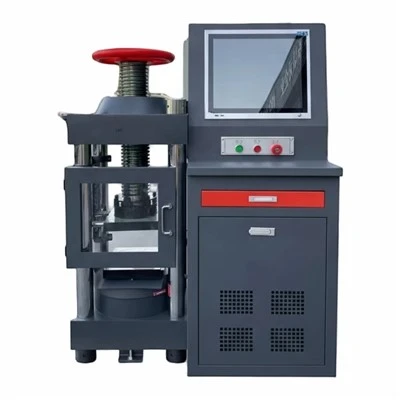
First off, let’s start with sample size and geometry. I see this all the time: a team comes to us saying, “Our UMT gave weird tension test numbers — what’s wrong?” Half the time, they’re testing a sample that’s way too big or small for the machine’s load frame capacity. Wait, what’s a load frame? That’s the part of the UMT that holds your sample and applies force. Most standard UMTs (the ones we sell, anyway) have a max load, usually from like 500 N up to 100 kN, depending on the model. If you test a super-strong sample, say, a thick steel bolt, on a 500 N UMT? The machine can’t generate enough force to break it — so it’ll just pull the sample straight out of the grips, and you get garbage data. On the flip side, if you test a tiny, delicate sample (like a 1mm thin polymer film) on a 100 kN machine, the load resolution is way too low. Resolution is how small a force the machine can measure accurately. A 100 kN machine’s resolution might be 1 N, so a 0.1 N force from that thin film gets lost in the noise. No bueno. Also, grip design: standard grips work for flat, regular samples, but if you’re testing something weird, like a curved pipe or a soft foam that squishes too easy? Basic grips will slip, or deform the sample before the test even starts. Yeah, you can get custom grips, but that’s an extra cost, and even then, not every odd sample shape has a solution.
Next up, rate control accuracy. UMTs let you set a test speed, right? Like “we want 5 mm per minute tension speed” — that controls the strain rate, which is how fast the material is being deformed. Different materials act totally different at different strain rates: a plastic bag tears slow, but snaps fast, same as rubber or even metal. But here’s the catch: most budget UMTs (and even a lot of mid-range ones) use open-loop speed control. That means the machine’s motor just spins at the set speed, no feedback about whether the sample is actually deforming at that rate. If your sample is super stretchy (like silicone), the motor might be spinning fast, but the grips are slipping, so the actual strain rate is way lower than you set. Or if there’s friction in the load frame’s linear bearings (which there always is, even well-maintained ones), the motor has to work harder, so it slows down without you noticing. Closed-loop control is better, but that’s only on higher-end UMTs — and even then, closed-loop relies on a load cell, which has its own limits. Speaking of load cells…
Load cell drift. A load cell is the sensor that measures how much force you’re applying to the sample. It’s the heart of a UMT, basically. But load cells aren’t perfect. Drift is when the measured force changes over time, even if you’re not applying any force. Why does that happen? Temperature changes, for one. If your lab jumps from 68°F to 75°F halfway through a test, the load cell expands a tiny bit, and suddenly your force readings are off by 1-2%. That might not matter for a super-tough metal, but if you’re testing a lightweight carbon fiber composite where the failure force is 10 N, that 0.1 N drift is a big deal. Also, if you drop the load cell (even a small drop, like off a lab bench), it can get permanent drift — we’ve had clients send in their UMTs for calibration because their numbers were off, and it turned out their tech knocked the load cell when moving a big sample. Calibration fixes it, but if you’re testing multiple samples in a batch and don’t check drift between tests, you’ll get inconsistent data. And don’t even get me started on off-axis loads. If the sample isn’t aligned perfectly in the grips, you get a sideways force (called a bending moment) that the load cell measures as part of the axial force. A lot of lower-end UMTs don’t have load cells that compensate for off-axis loads, so your tension test for a flat aluminum plate might be 5% lower than it actually is because it’s slightly crooked in the grips. That’s not the machine’s fault, but it’s a limitation that most people don’t account for.
Then there’s the issue of environmental control. A lot of materials tests don’t happen at room temp, right? Say you’re testing a plastic part that has to work in -40°F for a truck, or a rubber seal that needs to hold up at 150°F. Basic UMTs can’t do that — you need an environmental chamber, and not just any chamber. The chamber has to fit around the UMT’s load frame and grips, and it has to maintain consistent temp and humidity. But even with a chamber, UMTs struggle with extreme temps. At super high temps, the load cell and grips expand, which changes their calibration. At super low temps, lubricants in the load frame freeze up, so the movement is rough, and speed control gets messed up. Also, humidity: if you’re testing hygroscopic materials (like wood, paper, or some polymers), humidity changes how the sample behaves. A paper sample tested at 30% humidity is way stronger than one tested at 70%, but most standard UMTs don’t have humidity control built in. You can add that as an option, but it adds a ton of cost, and even then, the chamber’s air flow might not reach the sample evenly, so half the sample is at 50% humidity and half at 60% — inconsistent test data.
Small sample testing is another big one. If you’re testing microsamples, like 100 micrometer thin wires or tiny electronic component parts, standard UMTs just aren’t built for that. Their grips are too big, so you can’t hold a tiny sample without crushing it, and their load resolution is too low to measure the tiny forces involved. For example, testing a 100 μm copper wire’s tensile strength: the failure force might be only 0.5 N, but a standard 100 kN UMT’s load resolution is 1 N, so that 0.5 N is just going to show up as “no force” or “random noise.” You need a micro UMT for that, but those are way more expensive, and they have their own limitations too — like even smaller load ranges, and they can’t handle big, heavy samples. So if your lab does both big and small tests, you might need two machines, which is a budget hit.
Wait, let’s not forget about data processing and customization. UMTs come with software, right? It lets you set tests, collect data, generate reports. But a lot of standard UMT software is pretty basic. If you need to run a custom test, like a peel test for a medical adhesive that follows ASTM F904, or a fatigue test where you cycle force 10,000 times to see when a material fails, the standard software might not have that pre-programmed. You can program it, but that requires knowing how to code the machine’s commands, which a lot of lab techs don’t have time or training for. Or if you need to integrate the test data with your company’s ERP system for quality control, most basic UMTs can’t do that without extra modules, which again, adds cost. And if you need to analyze the data beyond what the software does — like calculating fracture toughness for a research paper — the standard output is just a force vs displacement graph, not the raw data you need for advanced analysis. You can export the data, but it’s not always in a format that’s easy to work with, so you have to spend hours cleaning it up.
Now, let’s talk about wear and tear over time. UMTs are heavy-duty machines, but they do wear out. The linear bearings I mentioned earlier, the motor, even the grips — all of these get worn down from repeated testing, especially if you’re doing 100 tests a day. A lot of suppliers (us included, obviously) offer regular maintenance, but if you skip it, the UMT’s accuracy drops. For example, the grip jaws get scratched, so they slip more, or the load frame’s alignment shifts, so off-axis loads get worse. We’ve had a client who bought a used UMT a few years back, didn’t get calibration, and their test data was so inconsistent that they had to scrap a whole batch of parts because the UMT said they were too weak, but a new test on a calibrated machine showed they were fine. That’s a costly mistake, all because of not maintaining the machine.
Wait, should I address the counterargument here? Like, sure, UMTs have limitations, but most of these are manageable, right? You just pick the right UMT for your needs, maintain it, use the right accessories, and you’re good to go. That’s true! A lot of these limitations are about matching the machine to your application, not the machine being bad. For example, if you’re testing construction materials like concrete beams, you need a UMT with a high load capacity (like 1000 kN), and you don’t need micro testing, so that’s perfect. If you’re in medical devices, you need a mid-range machine with environmental control for testing implant materials, so you get that. The problem is when people try to use a one-size-fits-all UMT for all their tests, or ignore the maintenance and calibration, and then blame the machine when the data is off.
As someone who supplies UMTs, I’d never sugarcoat these limitations because I want my clients to get a machine that works for them, not a machine that’s a waste of their money. If you’re in the market for a UMT, you should be thinking about what kinds of samples you test most often, what load range you need, if you need environmental control, and if your lab techs have the skills to use it — not just the lowest price tag.
If you’re dealing with inconsistent test data, struggling with sample size limits, or just not sure if your current UMT is right for your work, hit us up to chat. We can walk you through the different models, talk about accessories to fix those grip or resolution issues, and help you figure out what’s actually going to work for your team. No sales pitches, just honest advice based on what we’ve seen with hundreds of clients over the years.
Laboratory Instruments References
- ASTM International. (2020). Standard Test Methods for Tension Testing of Metallic Materials (E8/E8M-20). West Conshohocken, PA: ASTM International.
- Menezes, P. L., & Kishore, R. (2019). Material Testing: Principles and Applications. CRC Press.
- Veldhuis, S. C., & Axinte, D. A. (2018). Metrology for Advanced Manufacturing and Materials. Springer.
- International Organization for Standardization. (2021). Plastics — Determination of Tensile Properties (ISO 527-1:2019). Geneva, Switzerland: ISO.
Hebei Wanluda Testing Instrument Equipment Co., Ltd.
As one of the most professional universal materials tester manufacturers and suppliers in China, we have world-leading production equipment and strong manufacturing capabilities. Please rest assured to buy advanced universal materials tester made in China here from our factory.
Address: Zhouguantun Village, Xian County, Cangzhou City, Hebei Province, P.R.China
E-mail: wldinstrument@163.com
WebSite: https://www.wldinstrument.com/
